
You set a budget, picked a product, and now you are stuck on one question. Should the money go to TikTok or Instagram? Both promise reach. Both promise sales. Only one will give you the better return for your specific goal.
This is where most advertisers guess. They follow a trend or copy a competitor instead of looking at what the numbers actually say.
The TikTok vs Instagram advertising debate has a clearer answer than you might expect, once you separate hype from verified data.
Here is what you will get from this article:
- The real cost difference between the two platforms in 2026
- How engagement rates compare, and why the gap is huge
- Audience size and who you actually reach on each app
- Which platform converts browsers into buyers
- Two verified case studies with documented results
- A simple way to pick the right platform for your business
By the end, you will know which platform fits your goal, your budget, and your audience.
Get Up to $6000 Free TikTok Ad Credit
Table of Contents
Key Takeaways
- TikTok delivered an average engagement rate of 3.70% in 2025, more than seven times Instagram’s 0.48%, according to Socialinsider’s 2026 benchmark report covering 70 million posts.
- TikTok ad costs run lower than Meta platforms, with an average CPM of $6.21 in June 2025 based on Gupta Media’s tracker, though TikTok rates are rising fast.
- Instagram has the larger and more shopping-ready audience, with around 2 billion monthly users and strong purchase behavior built into the app.
- TikTok wins on cheap reach and viral discovery. Instagram wins on polished branding and high-intent shopping.
- Real campaigns back this up: Ray-Ban cut cost per acquisition 50% on TikTok, while Konesso lifted revenue 80.4%.
Which Is Better, TikTok or Instagram Ads?
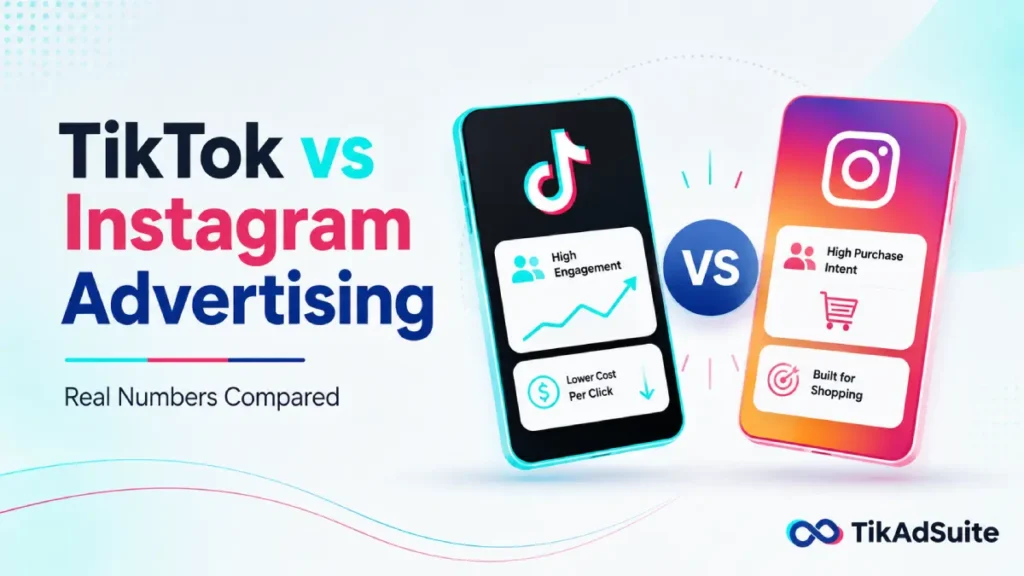
TikTok is better for cheap reach, viral discovery, and reaching younger buyers through native video. Instagram is better for polished branding, shopping features, and reaching a broad 25 to 34 audience. The right choice depends on your product, budget, and whether you want low-cost attention or higher purchase intent.
Which Platform Is Cheaper to Advertise On?
TikTok is the cheaper entry point for most advertisers. According to Gupta Media’s Social Media CPM Tracker, the cost of TikTok ads in June 2025 was $6.21 CPM for every thousand views. The average cost per link click sat at just 31 cents. (Source)
That price advantage comes with a warning. TikTok’s advertising rates are growing at 12.28% year over year, which is nearly twice as fast as Meta’s ad rates are rising. The cheap window is closing slowly, but it is still open.
CPM stands for cost per mille, the price you pay for one thousand ad impressions. A lower CPM means you reach more people for the same money. You can dig deeper into how these rates shift in this breakdown of TikTok CPM rates.
Instagram, sitting inside Meta’s ad system, tends to cost more per impression than TikTok. You pay a premium for Meta’s mature targeting and its more shopping-focused crowd. If your margins are thin and you need volume, TikTok’s lower floor matters. If you can afford a higher cost for warmer traffic, Instagram earns its price.
How Do Audience Size and Demographics Compare?
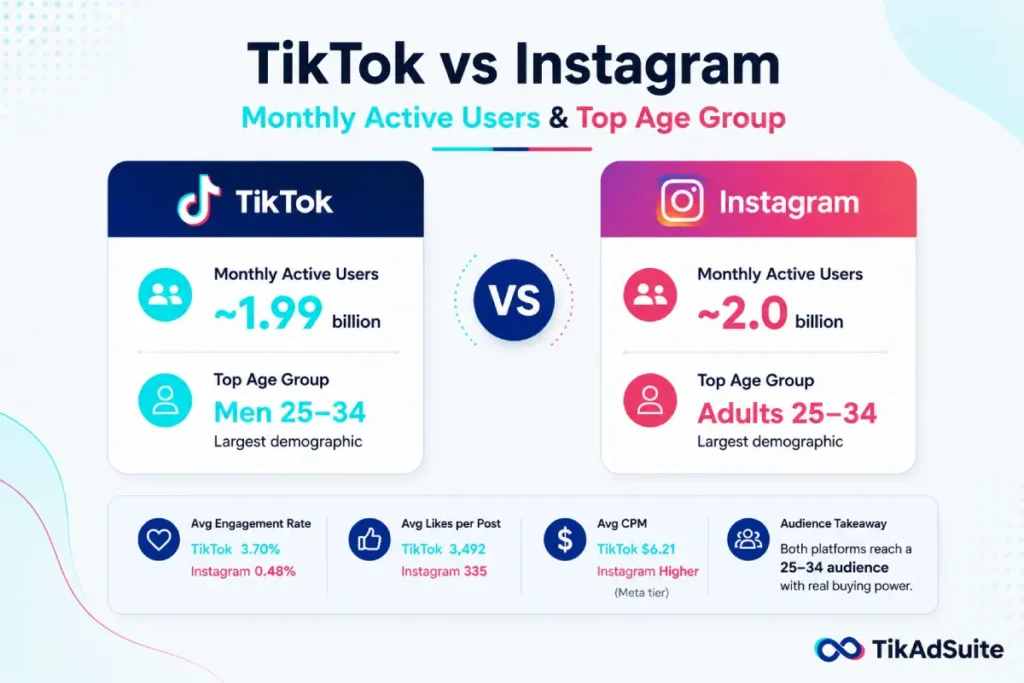
Instagram has the bigger and more even spread of users. According to Statista, Instagram had about two billion monthly active users worldwide as of early 2025. Its most active group is people aged 25 to 34, who make up over 31 percent of the total user base, which means strong Millennial and older Gen Z reach.
TikTok is close behind in scale. Statista reports that TikTok has reached 1.99 billion users, though it ranks fifth among networks by monthly active users. Its largest demographic as of late 2025 was males aged 25 to 34, which surprises advertisers who still think of it as a teen app.
Here is the head-to-head on the numbers that matter most:
| Metric | TikTok | |
| Monthly users | ~1.99 billion | ~2 billion |
| Largest age group | Men 25 to 34 | Adults 25 to 34 |
| Avg engagement rate (2025) | 3.70% | 0.48% |
| Avg likes per post (2025) | 3,492 | 335 |
| Avg CPM (2025) | $6.21 | Higher (Meta tier) |
Both platforms now skew toward the 25 to 34 buyer with real spending power. The old idea that TikTok only reaches kids is out of date. You can explore the full picture in this guide to TikTok user demographics.
Which Platform Gets More Engagement?
This is where TikTok pulls far ahead. According to Socialinsider’s 2026 Social Media Benchmark Report, TikTok’s engagement rate surged 49% year over year to 3.70% in 2025, more than seven times Instagram’s 0.48% and nearly 25 times Facebook’s 0.15%. (Source)
The per-post gap is just as wide. TikTok averaged 3,492 likes per post in 2025, up 12%, against Instagram’s 335. That is not a small edge. It is a different league.
Engagement means any action a user takes, like a like, comment, share, or full video watch. High engagement signals that people actually care about what they see. The pattern is widening, not closing. Instagram’s rate dipped slightly from 0.50% to 0.48%, while TikTok moved in the opposite direction.
Why the difference? TikTok’s feed is built around discovery, not follower count. A brand new account can land on millions of screens if the video is good. That rewards bold, native creative over polished brand ads.
Which Drives More Sales and Conversions?
Engagement is not the same as a sale. Here, Instagram has a real claim. The app is built for shopping, and users behave like shoppers. Sprout Social found that 29% of Instagram users make purchases on Instagram, making it the third most used social platform for buying.
Meta’s conversion tools are mature and well tracked. WebFX reports that Facebook conversion rates range from 2% to 14% by industry, with an average return on ad spend of 2.79. Instagram shares that same proven ad engine.
TikTok counters with purchase intent driven by discovery. Sprout Social notes that TikTok is the top channel for product discovery among Gen Z, with 49% of consumers turning to the platform. That is where new demand is born. To see how those clicks turn into buyers, review these TikTok conversion rate benchmarks.
The simple split is this. Instagram captures people ready to buy now. TikTok creates the want in the first place. Many brands use both, with TikTok at the top of the funnel and Instagram closer to the sale.
TikTok Advertising Case Studies That Prove the Numbers
Stats are useful, but real campaigns show what is possible. These two come straight from TikTok for Business documentation.
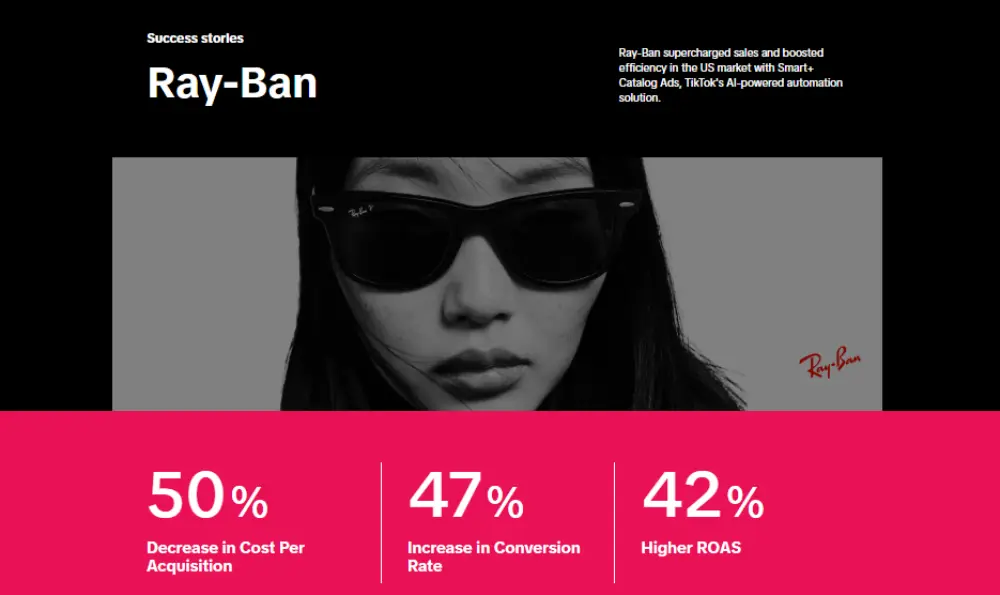
Ray-Ban wanted more sunglasses sales during peak summer. The brand used TikTok’s AI-driven Smart+ Catalog Ads. According to TikTok for Business, Ray-Ban achieved a 50% decrease in cost per acquisition, its conversion rate rose by 47%, and the campaign delivered 42% higher return on ad spend. The win came from automation and native creative, not a bigger budget.
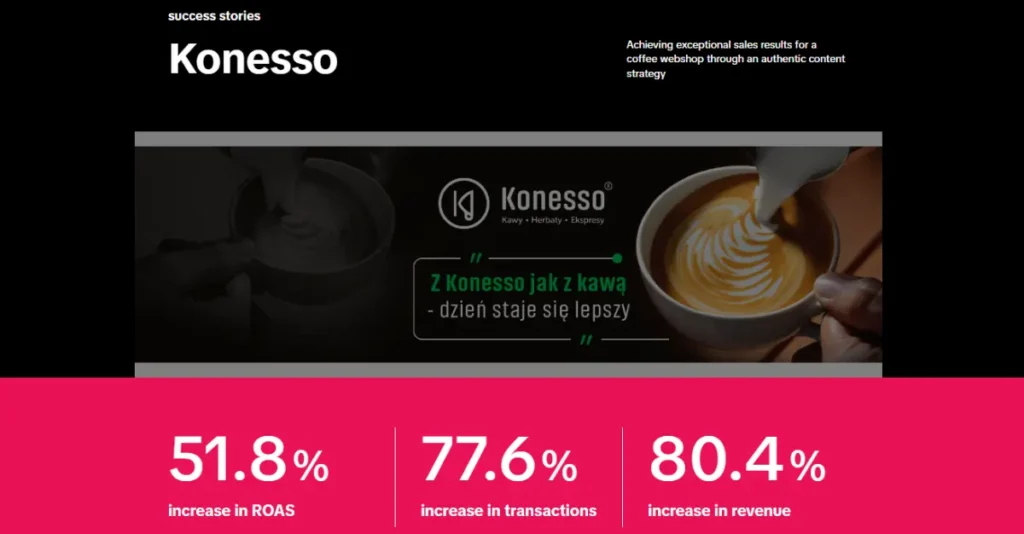
Konesso, a premium coffee web shop, tested a different idea. Instead of typical sales scripts, it ran authentic, organic-style content as ads. A separate TikTok for Business case study reports the campaign delivered a 51.8% increase in ROAS, a 77.6% increase in transactions, and an 80.4% increase in revenue. The lesson lines up with the engagement data. Content that feels real beats content that feels like an ad.
Strong creative does the heavy lifting on both platforms. A simple editor like CapCut helps you produce the native, fast-cut video that TikTok’s algorithm rewards. For more on what makes these ads land, study the rules behind winning TikTok ads.
When Instagram Advertising Is the Better Choice
TikTok wins on price and reach, but Instagram still owns clear use cases. Pick Instagram when these fit your goal.
- You sell visual products like fashion, beauty, home, or jewelry, where polished photos and Reels shine.
- You want built-in shopping, since users already buy inside the app at a high rate.
- You need precise targeting and proven conversion tracking from Meta’s mature ad tools.
- Your buyers skew 25 to 44 and respond to brand-led, aspirational content.
- You want a stable, predictable platform rather than the faster swings of viral video.
Instagram also rewards consistency. Brands that win there focus on quality and relevance, not just posting more. If your brand already has a strong photo identity, that work carries over directly into paid ads. For a wider view across Meta, compare notes in this look at TikTok ads versus Facebook ads.
How Do You Choose Between TikTok and Instagram Ads?
Match the platform to your main goal, not to the trend of the week. Use this quick filter.
Choose TikTok if you want cheap reach, viral discovery, and younger buyers, and you can make native, casual video. The low CPM and high engagement reward creative risk.
Choose Instagram if you sell visual products, want shopping built in, and need reliable targeting for a 25 to 44 audience. The higher cost buys warmer, ready-to-buy traffic.
Choose both if your budget allows. Run TikTok to spark demand and Instagram to close it. Many growing brands split spend this way and let each platform do what it does best. Test small, watch the numbers, then move budget toward whichever delivers your lowest cost per sale.
Frequently Asked Questions
Does TikTok really get more engagement than Instagram?
Yes, by a wide margin. Socialinsider’s 2026 report found TikTok averaged a 3.70% engagement rate in 2025, more than seven times Instagram’s 0.48%. TikTok also averaged 3,492 likes per post versus Instagram’s 335. The gap grew over the year as TikTok rose and Instagram dipped slightly.
Which platform is better for selling products?
It depends on the funnel stage. Instagram is stronger for closing sales, since 29% of its users buy inside the app and Meta’s conversion tools are proven. TikTok is stronger for discovery, with 49% of Gen Z using it to find new products. Brands often pair both for full coverage.
Who uses TikTok versus Instagram?
Both lean toward the 25 to 34 age group. TikTok’s largest demographic in late 2025 was men aged 25 to 34. Instagram’s biggest group is also 25 to 34, making up over 31% of its base. Both reach far beyond teens, so target by interest and behavior rather than age alone.
Can I run ads on both platforms with one strategy?
You can, but adjust the creative. TikTok rewards raw, native, fast-paced video that feels like organic content. Instagram favors polished, visually clean Reels and photos. Use TikTok to build awareness and Instagram to drive purchases, then shift budget toward the platform with your lowest cost per result.
Wrapping Up
The TikTok vs Instagram advertising choice is not about which platform is best. It is about which one fits your goal right now.
TikTok gives you cheap reach and the highest engagement in social media. Instagram gives you a polished, shopping-ready audience and proven conversion tools.
Start with one platform that matches your main objective. If you want low-cost discovery and your product suits casual video, launch on TikTok first.
The fastest way to begin is to set up a campaign in TikTok Ads, test a few creatives, and let the data show you what works.
Whatever you choose, let real numbers guide your spend, not guesswork. Run small tests, track cost per sale, and double down on the platform that pays you back.