
Novice TikTok advertisers fail because they treat the platform like a shorter version of YouTube. They polish, script, and sell, where users scroll right past. The brands that consistently drive real results do something different: they create ads that feel like content.
This list of TikTok ad examples pulls only from verified case studies and documented brand results. No made-up numbers, no vague claims.
Whether you run a small eCommerce store or manage a global brand, these real-world examples shows what actually works, why it worked, and what you can take from each one.
Here is what you will learn:
- Which ad formats drove the strongest results, and why
- How brands across different industries built TikTok campaigns that converted
- The patterns that separate forgettable ads from high-performing ones
- Practical takeaways you can apply to your own campaigns
Get Up to $6000 Free TikTok Ad Credit
Table of Contents
Key Takeaways
- Authenticity outperforms polish. Ads that blend into the For You Page consistently outperform traditional ad formats.
- User-generated content (UGC) is your biggest asset. Brands that sparked community participation saw compounding results.
- Branded Hashtag Challenges turn viewers into creators and creators into customers.
- Spark Ads are one of the most efficient paid formats, amplifying content that is already earning organic traction.
- Pairing paid and organic strategies consistently produces stronger lift than either approach alone.
What Makes a Great TikTok Ad?
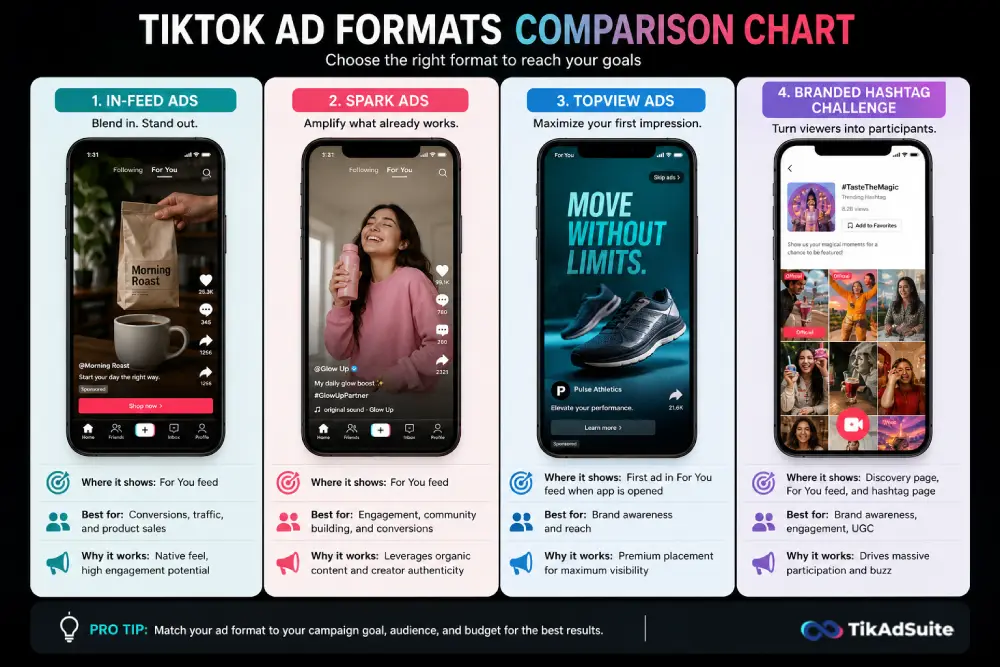
The best TikTok ads feel native to the platform: short, specific, and driven by a hook in the first three seconds. They use creator-style content, trending audio, or a clear emotional angle rather than traditional ad language. Based on the case studies below, the most effective formats include In-Feed Ads, Spark Ads, Branded Hashtag Challenges, and TopView placements.
1. Little Moons — One Day Max In-Feed Ad
Ad Format: One Day Max In-Feed Ad
Source: TikTok for Business case study
Little Moons, a UK-based mochi ice cream brand, was already going viral organically on TikTok when it decided to put paid support behind the momentum. Rather than launching a polished ad, the brand leaned into the same casual, handheld style that users had already embraced.
Their One Day Max In-Feed Ad ran for a single day in the For You feed. It showed viewers the product in action: where to find it (Tesco), and the five-minute soften-and-stretch ritual that made the treat so shareable in the first place.
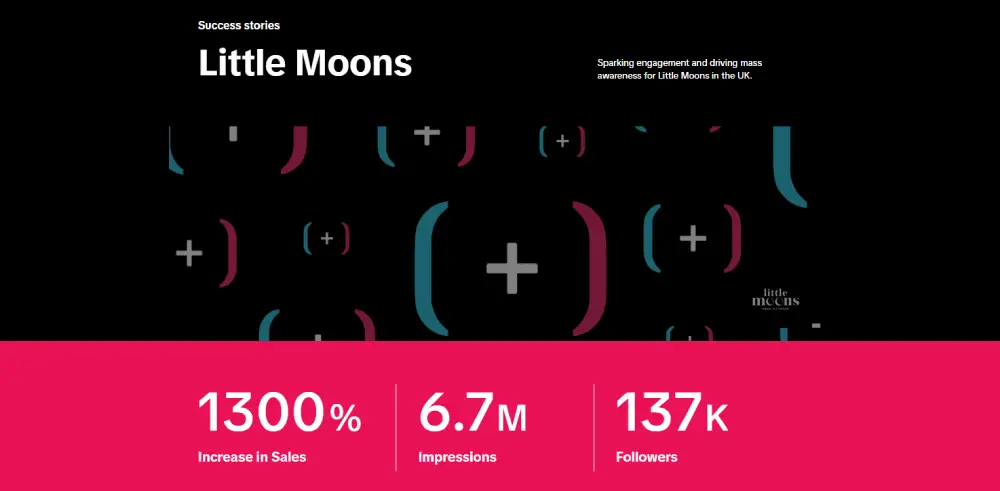
The ad drove 6.7 million impressions and a 4.54% engagement rate from that single placement. Tesco sales climbed 1,300% compared to the same period in December.
The brand’s TikTok account reached 137,000 followers, and prompted brand awareness tripled, according to tracking data from Attest.
Takeaway: When you already have organic momentum, a well-timed In-Feed Ad acts as an accelerant. Keep the creative native, not corporate.
2. Chipotle — #GuacDance Hashtag Challenge
Ad Format: Branded Hashtag Challenge
Source: Chipotle investor relations press release, August 2019
To celebrate National Avocado Day in 2019, Chipotle launched the #GuacDance challenge, inviting users to film their best guacamole-inspired dance moves in exchange for free guac on orders placed via the app. The challenge was seeded with creators, including Loren Gray, and tied to Dr. Jean’s viral “Guacamole Song.”
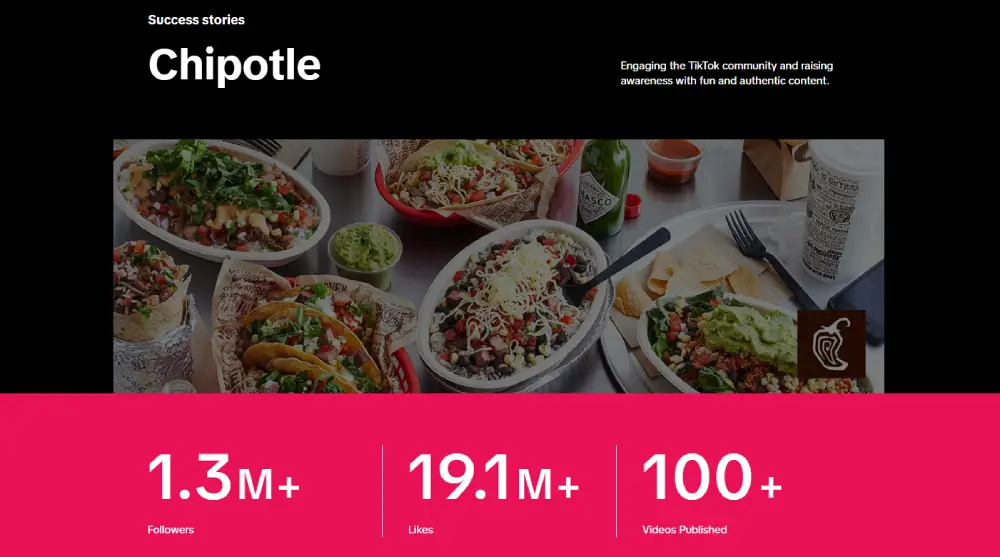
In six days, the campaign generated over 250,000 video submissions and 430 million video starts. It became TikTok’s highest-performing branded challenge in the US at the time.
Chipotle served more than 800,000 sides of guacamole that day, its biggest guac day in company history, according to the official investor press release.
Takeaway: Tying a hashtag challenge to a real-world incentive and a specific cultural moment creates a natural formula for participation. Give people a reason and a stage, and they will show up.
3. Gymshark — #Gymshark66 Challenge
Ad Format: Influencer-Led Hashtag Challenge
Source: Marketing Weekly case study
Gymshark’s “66 Days | Change Your Life” challenge asked users to commit to a personal fitness goal, post a before photo, and share their progress 66 days later.
The brand partnered with six fitness and dance influencers who had larger followings on TikTok than on Instagram, a deliberate choice to reach users who were already native to the platform.
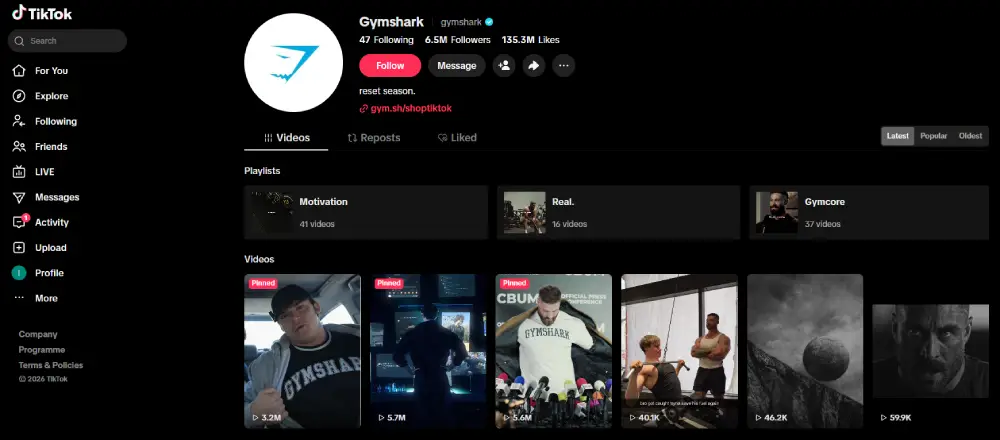
The campaign hashtag #gymshark66 accumulated 45.5 million views, with nearly 1.9 million likes and 12,576 comments across influencer posts.
Rather than running high-budget polished ads, Gymshark built community participation, and users kept the content running long after the campaign launched. The brand’s TikTok account grew to over 3.4 million followers.
Takeaway: Pick influencers based on platform fit, not just follower count. A creator who feels native to TikTok will consistently outperform a bigger name who does not.
4. CeraVe — The “Michael CeraVe” TikTok Campaign
Ad Format: Multi-phase influencer-first TikTok strategy
Source: PR Newswire, February 2024
CeraVe’s 2024 campaign is one of the more creative multi-platform strategies built around TikTok.
Weeks before their Super Bowl commercial aired, CeraVe seeded content across TikTok showing actor Michael Cera mysteriously “claiming” ownership of the brand: signing products, sending PR boxes, and walking off a podcast interview with influencer Bobbi Althoff.
The campaign generated 15.4 billion impressions before the Super Bowl ad even aired, fueled by over 400 influencers who joined the conversation organically, per reporting from The Drum.
The Super Bowl reveal then delivered the punchline: CeraVe is developed with dermatologists, not Michael Cera.
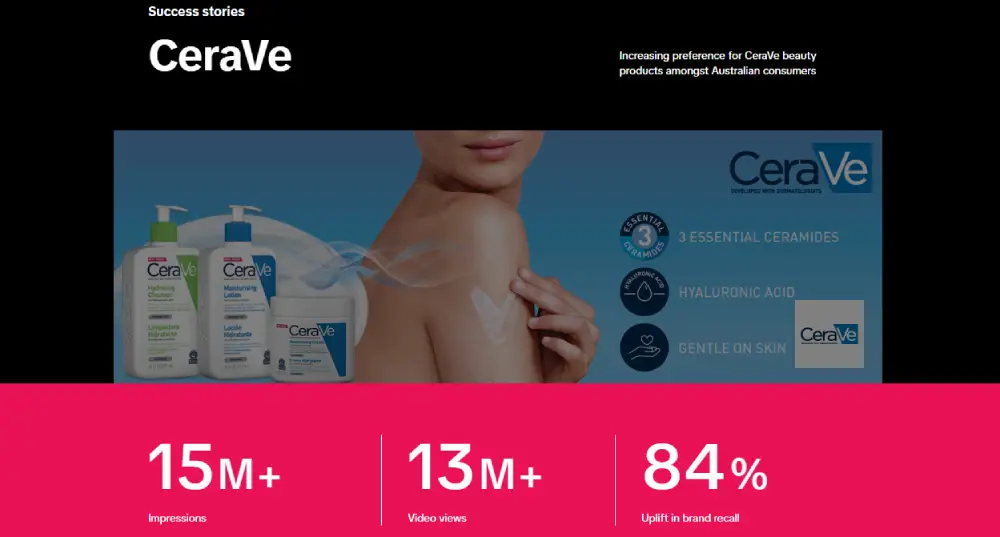
It is worth noting that CeraVe also ran a separate, earlier Australian TikTok campaign using TopView and In-Feed Ads, which produced 15 million impressions, 13 million video views, an 84% uplift in brand recall, and a 29% lift in brand preference over competitors, per a TikTok for Business case study. Both campaigns illustrate what a TikTok-first approach can achieve at very different budget scales.
Takeaway: Building a narrative arc across TikTok before a major campaign moment creates earned media that paid placements cannot buy on their own.
5. Wet n Wild — Big Poppa Mascara Campaign
Ad Format: Branded Hashtag Challenge + TopView + One Day Max In-Feed Ads
Source: TikTok for Business case study
Wet n wild went all-in on TikTok for the launch of its Big Poppa mascara, using several major ad formats together.
The campaign opened with a custom track called “Big Poppa Heart Stoppa,” produced by TikTok creator and artist JVKE, which debuted on the brand’s account before seeding out to creator posts.
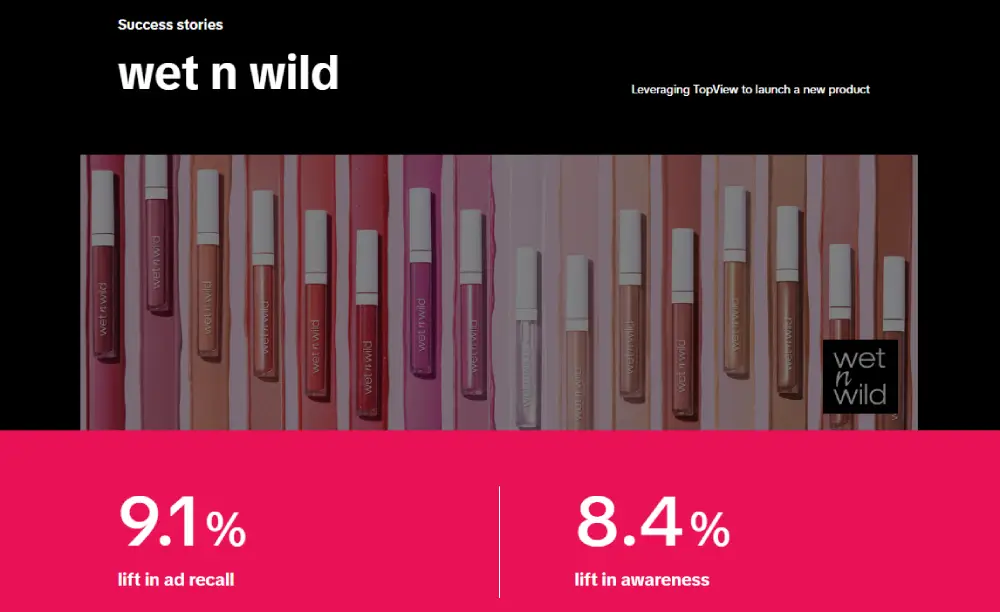
The One Day Max ads reached 45 million users with more than 80 million total views at a 6% engagement rate.
The TopView placement separately drove 55 million video views at a 13.7% engagement rate. A post-campaign brand lift study showed a 17.2% lift in ad recall and a 9.6% increase in brand awareness.
Takeaway: For product launches, using multiple TikTok ad formats in sequence keeps the campaign feeling fresh at different points in the customer journey rather than burning out the same creative.
6. Duolingo — Mascot-Driven Content Strategy
Ad Format: Creator-style organic content with paid amplification
Source: Rival IQ analysis
Duolingo’s approach to TikTok does not look like advertising, which is precisely why it works. The brand treats its account like a creator page rather than a corporate channel.
The Duo mascot participates in trending formats, responds to comments in character, and shows up in collaborations with other brand mascots and public figures.
A single video poking fun at the experience of wearing a mascot suit full-time racked up 602,000 total engagements and a 21.5% engagement rate by view, which Rival IQ reported as 3.5 times higher than comparable language-learning apps like Rosetta Stone and Babbel on TikTok.
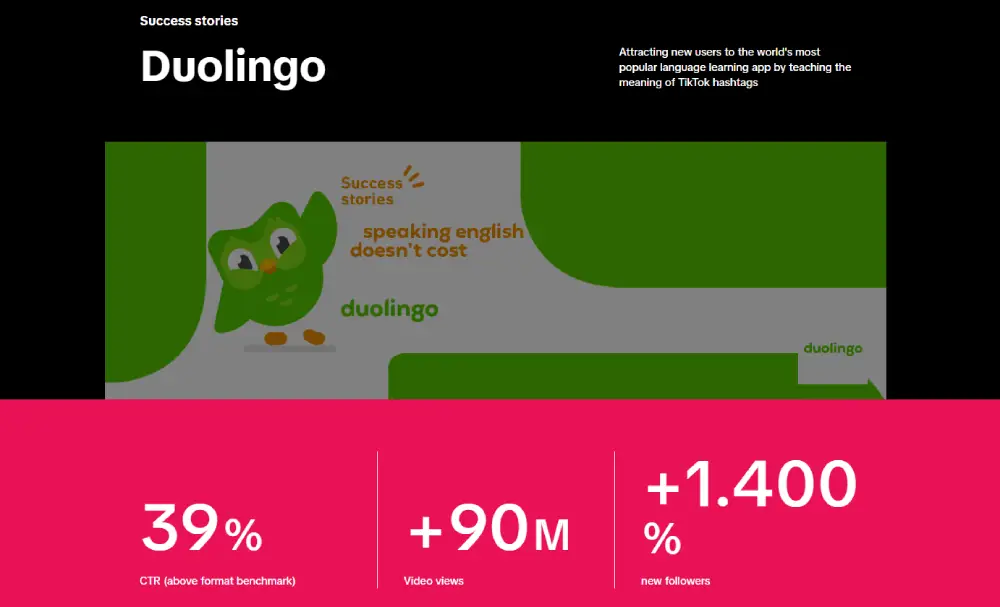
According to Duolingo’s Q4 2024 earnings report filed with the SEC, the app reached 40.5 million daily active users and 116.7 million monthly active users by the end of Q4 2024, growth the company ties directly to its social-first content approach.
Takeaway: A distinct brand personality is a long-term competitive advantage on TikTok. If your brand can make someone laugh, they will remember you the next time they need what you sell.
7. K18 Hair — Spark Ads and Reach and Frequency
Ad Format: Spark Ads + Reach and Frequency
Source: Incrementum Digital, citing TikTok for Business data
K18, the hair care brand known for its peptide mask, launched on TikTok in 2020 and quickly identified Spark Ads and Reach and Frequency solutions as the tools to scale its presence.
Rather than producing standalone brand ads, K18 amplified existing creator content that was already performing, keeping the native feel intact.
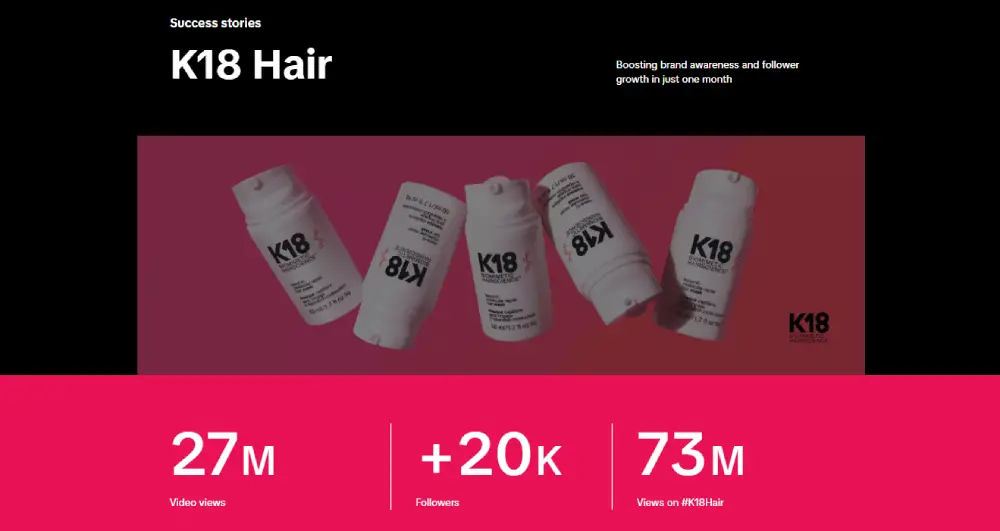
Over a one-month campaign, K18 saw a 70% increase in daily average sales. Its TikTok following grew from 2,000 to 20,000 followers within the same campaign window.
Takeaway: Spark Ads work because they look like content, not interruptions. If a creator has already made a video that connects, boosting it is one of the most efficient moves in TikTok advertising.
8. Booking.com — Always-On Full-Funnel Campaign
Ad Format: Spark Ads + In-Feed Ads + Trending Audio
Source: TikTok Ad Awards 2024 UK
Booking.com won at the 2024 TikTok Ad Awards in the UK with a full-funnel, always-on approach that centered on travel motivation rather than travel destinations.
The brand used trending audio, text-to-speech overlays, and platform-native creative templates to make their ads feel like organic travel content rather than branded placements.
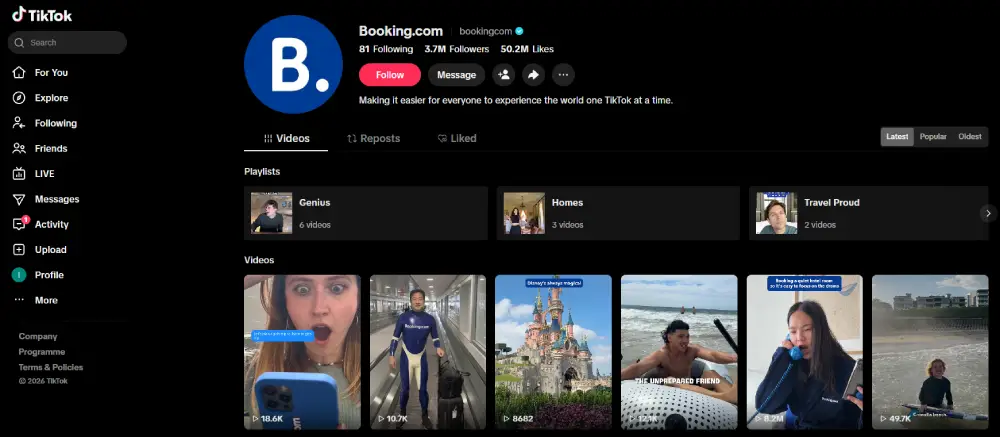
The strategy combined Spark Ads and In-Feed Ads to amplify creator content, including a community mechanic around #BookingGenius.
The campaign drove strong engagement across multiple audience segments and was recognized for demonstrating TikTok’s ability to push awareness and conversion at the same time.
Takeaway: An always-on paid strategy with consistent creative refresh outperforms a one-off campaign. TikTok rewards frequency paired with creative variety, not the same asset repeated.
9. Dove — #TheFaceOf10 Campaign
Ad Format: Creator Content boosted as Spark Ads
Source: TikTok Ad Awards 2024 UK
Dove used TikTok to launch a campaign pushing back against the trend of young girls using anti-aging skincare.
The #TheFaceOf10 campaign partnered with creators who produced content around protecting children from harmful beauty standards, and those videos were then boosted as Spark Ads to extend their reach.
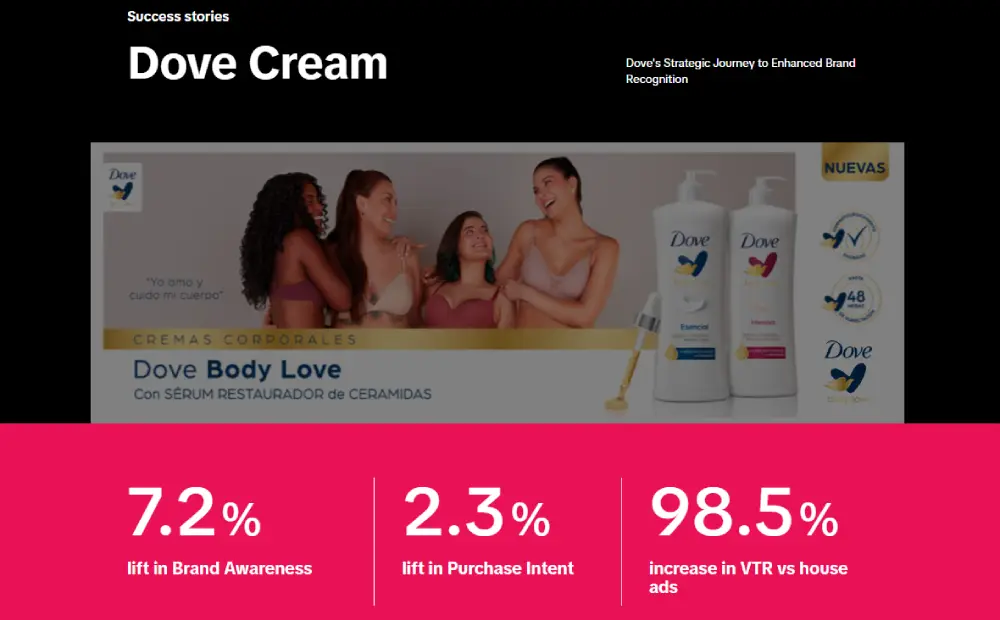
Rather than running a traditional brand announcement, Dove let creators carry the message. The posts landed as community conversation, not advertising, which is why they resonated.
TikTok’s large, engaged community made it the right platform to spark this kind of cultural discussion at scale.
Takeaway: Cause-driven ads earn attention on TikTok when they are creator-first and values-aligned. Spark Ads are the most credible vehicle for this kind of content because they preserve the original creator’s voice and the engagement already built around it.
10. Nike — “She’s Ballin’” In-Feed Ad
Ad Format: In-Feed Ad
Source: Success Stpries Nike
Nike’s “She’s Ballin’” campaign for women’s football landed in the top 20% of all UK TikTok ads based on viewer response data. The ad featured upbeat, community-focused footage that viewers described as having a “happy and communal vibe.”
Research tied to the campaign found that 65% of users watched the full ad, and on average, viewers watched 80% of the video, both figures well above typical platform norms.
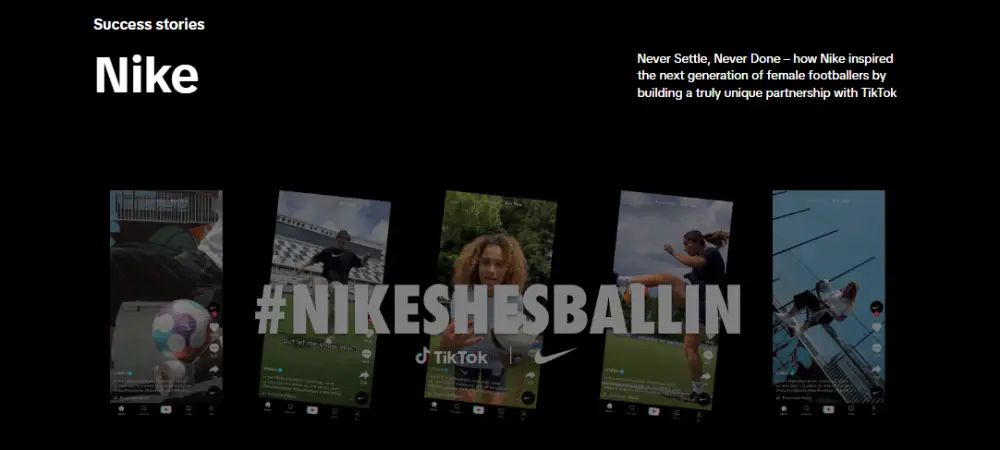
The campaign used the #NikeShesBallin hashtag to invite audience participation around how users express themselves through football, connecting the ad to a community identity rather than just a product feature.
Takeaway: When your audience feels like part of the story rather than the target of an ad, completion rates climb. Community framing drives stronger viewer retention than product-led creative.
11. The Works — BookTok Spark Ads Campaign
Ad Format: Creator Content boosted as Spark Ads
Source: TikTok Ad Awards 2024 UK
UK retail brand The Works tapped into the #BookTok community, which has almost 40 million video posts on TikTok, to drive both online and in-store book sales.
The brand worked with creators producing BookTok Live sessions and haul-style videos featuring trending titles, then boosted that content weekly as Spark Ads.
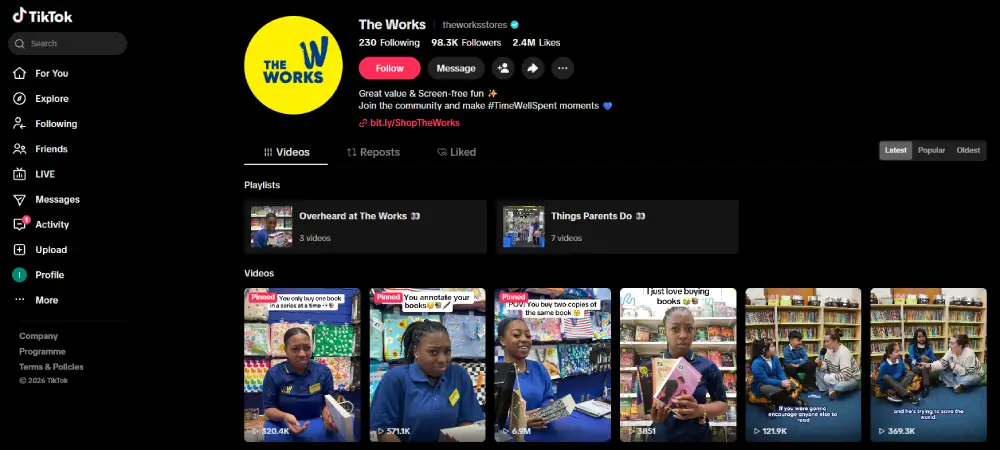
The campaign performed strongly enough that The Works shifted advertising spend away from other platforms and into TikTok entirely.
Refreshing creative weekly kept the campaign from fatiguing, and the Spark Ads retained the community feel of organic BookTok content throughout the run.
Takeaway: You do not need to build a trend from scratch. Finding an existing passionate community on TikTok and producing creator content within it is often more effective than trying to engineer something new.
12. MYKA by Tenengroup — Targeted Retargeting Strategy
Ad Format: Targeted In-Feed Ads + Retargeting
Source: Debutify case study
Tenengroup, an eCommerce house managing multiple brands including MYKA, a handmade jewelry label, built a Father’s Day campaign on TikTok that focused as much on who to exclude as who to reach.
The team excluded users who had already completed a purchase within the last two weeks and ran retargeting ads specifically for users who had visited the brand’s website or watched at least six seconds of their videos.
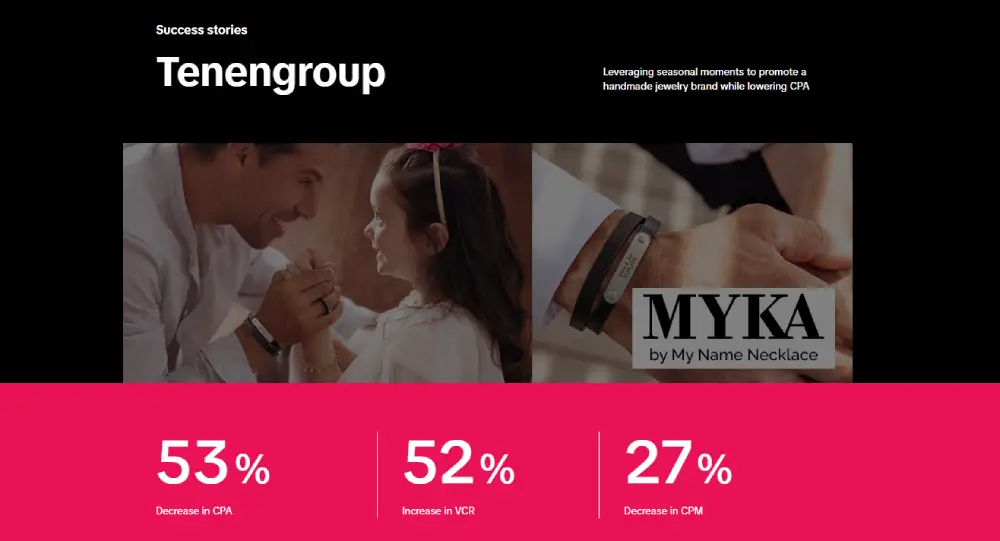
The audience segmentation paid off clearly: cost per action (CPA) dropped by 53% and conversion rate increased by 52% compared to the campaign benchmark.
Takeaway: Smarter targeting beats a bigger budget. Excluding existing customers from acquisition campaigns and prioritizing warm retargeting audiences can dramatically improve efficiency without changing a single frame of creative.
13. Dremel — Blueprint Tools Creator Campaign
Ad Format: Creator-Seeded Organic Content
Source: Popular Pays TikTok case studies
Power tool brand Dremel partnered with TikTok creators to launch its Blueprint line, a range of compact, beginner-friendly tools built around DIY home projects.
The campaign featured creators in the “busy parent” space who showed how the tools made small home projects feel approachable, without the intimidation that traditional power tools can carry.
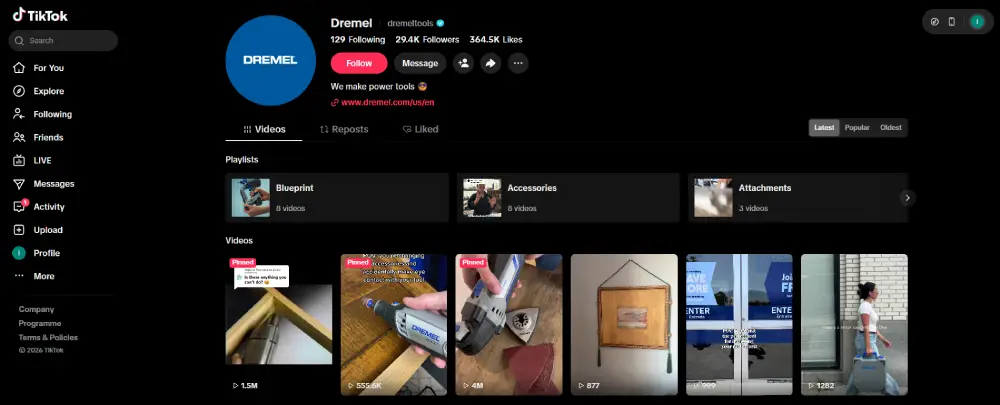
The campaign drove a 1,200% increase in social traffic compared to all of the previous year. The Blueprint line sold out at major retailers on consecutive days and earned premium shelf placement typically reserved for established bestsellers.
The brand described the results as a level of visibility it had never experienced before, with audiences from the UK, Germany, and Australia commenting to request availability in their markets.
Takeaway: TikTok’s algorithm has no borders. A product built for a specific niche can find audiences far beyond your original target market when creator content resonates authentically.
What All 13 TikTok Ad Examples Have in Common
Not one of these campaigns looked like a traditional ad. The creative felt native: vertical video, natural language, real people in real situations. What made them work was not production value. It was relevant.
The strongest thread across all 13 is a platform-first approach. These brands did not repurpose TV spots or Instagram content. They started with how TikTok users actually behave and built from there.
A few things show up consistently:
- A hook in the first three seconds. Every ad above does something immediately engaging, whether that is a surprising fact, a funny moment, or a visual that stops the scroll.
- Community over broadcast. The highest-performing campaigns invited participation rather than just asking for views.
- Organic and paid work together. Every brand that hit outsized numbers combined creator-driven organic content with paid amplification. Neither approach alone produced the same result.
FAQs
What TikTok ad format works best for small businesses?
In-Feed Ads and Spark Ads are the most accessible formats for smaller budgets. Spark Ads let you amplify existing creator content, including UGC from real customers, without producing a polished ad from scratch. Start with a single creator video, watch its organic performance for a few days, then boost the version already showing traction.
How long should a TikTok ad be?
Most high-performing TikTok ads run between 9 and 15 seconds. The Wet’n Wild and Nike examples both showed strong completion rates in that range. Longer formats up to 60 seconds can work for educational or storytelling content, but you need a strong hook within the first two seconds, regardless of total length.
Do I need a big budget to run successful TikTok ads?
Not necessarily. The MYKA and Tenengroup case study shows that precise targeting, specifically excluding the wrong audiences, dramatically improved results without increasing spend. Creative quality and audience fit consistently matter more than the size of the budget behind a campaign.
How do you measure TikTok ad performance?
The key metrics to watch are video completion rate, engagement rate (likes, comments, shares), click-through rate, and cost per action (CPA). For brand awareness goals, a brand lift study measuring ad recall and preference change, similar to what Wet n Wild and CeraVe each ran, gives you the clearest view of real impact beyond raw view counts.
How do I find the right creators for a TikTok ad campaign?
Focus on creators whose content style matches how your product would naturally be used, not just their follower count. As the Gymshark and Little Moons examples both show, nano and micro influencers with under 15,000 followers often drive stronger engagement and more genuine audience responses than larger accounts. TikTok’s Creator Marketplace is a practical starting point for filtering by niche, audience size, and engagement metrics.
Conclusion
Every campaign on this list was built for TikTok, not adapted to it. Little Moons did not run a product demo. It made a video that looked like the content already surrounding it.
Chipotle did not push a discount code. It gave people a dance challenge. Duolingo did not explain its features. It made you laugh.
What works on TikTok in 2026 is the same thing that worked in 2021: content that earns attention rather than interrupting it. Your ad budget determines reach. Your creativity determines whether anyone cares.
Use these examples as a reference point, not a rigid template. The best TikTok ad is always the one your specific audience actually wants to watch.