
Running paid ads and watching your cost per lead creep upward is one of the most frustrating parts of digital marketing.
You adjust audiences, test fresh creatives, and the numbers still barely shift. For a growing number of advertisers, that frustration is what sends them to TikTok, and the results tend to follow.
TikTok lead gen ads let businesses collect contact information directly inside the app, without asking anyone to tap away to a landing page. That single difference has a bigger impact on campaign performance than most people expect.
This guide covers exactly how these ads work, what they realistically cost, how to build your first campaign, and what separates the setups that convert from the ones that just burn budget.
Here is what you will learn:
- What TikTok lead gen ads are and why they work differently from traditional ad funnels
- How Instant Forms reduce drop-off and improve lead quality
- What CPL benchmarks actually look like in 2026
- Step-by-step setup inside TikTok Ads Manager
- How to connect leads to your CRM automatically
- Creative principles that consistently drive form submissions
By the end, you will have a clear picture of whether TikTok lead generation fits your business and how to run it the right way from day one.
Get Up to $6000 Free TikTok Ad Credit
Table of Contents
Key Takeaways
- TikTok lead gen ads use in-app Instant Forms to collect contacts without redirecting users off the platform, which removes the friction that kills most mobile funnels
- CPL benchmarks for 2026 range from roughly $8 to $15 for B2C and $25 to $60 for B2B, based on aggregated agency data. Results vary significantly by creative quality and vertical
- Smart+ campaigns automate audience selection and delivery using TikTok’s AI, making them a good entry point for advertisers without advanced targeting experience
- Spark Ads deliver 2.4x higher click-through rates than standard in-feed ads and should anchor the creative mix for most campaigns
- The MIT Lead Response Management Study found you are 21x more likely to qualify a lead if you follow up within five minutes vs. 30 minutes, and set up CRM automation before launch
- Running TikTok alongside Facebook rather than replacing one with the other typically produces better lead coverage and more useful performance data
What Are TikTok Lead Gen Ads?
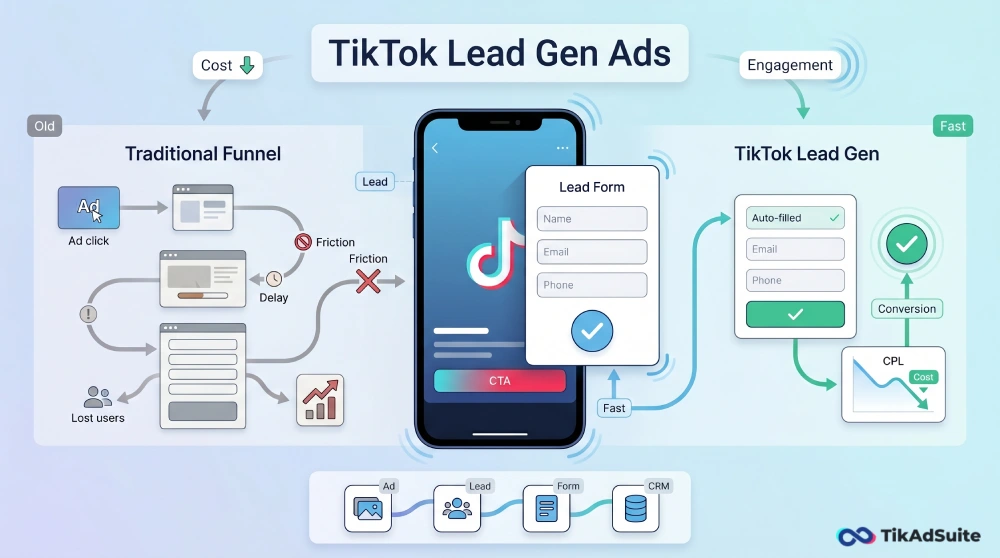
TikTok lead gen ads are a paid ad format that lets users submit their contact details without leaving the TikTok app. When someone taps the call-to-action button on your ad, an Instant Form opens directly within the feed.
Their name, email, and phone number are pre-filled from their TikTok profile, so all they need to do is review and confirm.
That low-friction experience is the main reason these ads outperform traditional click-to-landing-page campaigns across many verticals. No redirect, no waiting for a page to load.
No retyping contact information on a small screen. The form appears in seconds, and so does your lead.
According to TikTok’s Marketing Science Global Lead Gen Consumer Journey Survey, TikTok users are 1.3x more likely to sign up for something within an in-app ad than on other platforms, a direct result of removing those extra steps from the process.
Why Lower Friction Means Lower CPL
The classic mobile lead funnel has more steps than most people account for: the user sees the ad, taps the link, waits for the page to load, and then manually fills in their details.
Every one of those steps is a place where you lose people. Google’s research on mobile page speed shows that a three-second load delay can reduce mobile conversions by up to 32%, and that is before form abandonment even enters the picture.
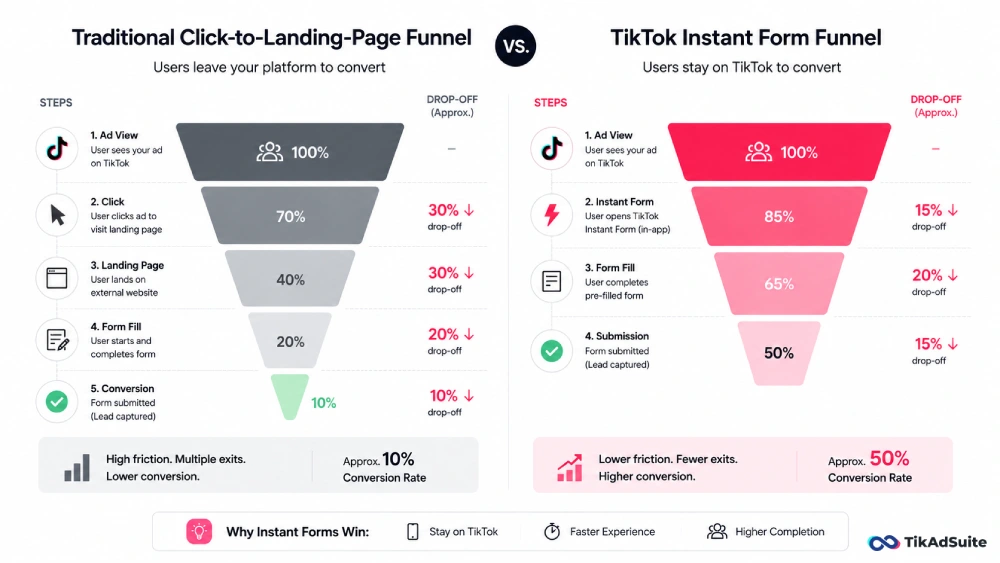
TikTok Instant Forms compress that journey to two steps: see the ad, submit the form. The result is a meaningfully lower cost per lead for most advertisers, particularly in B2C verticals.
Based on benchmarks compiled from multiple agency data sources, TikTok lead gen CPLs in 2026 typically fall between $8 and $15 for B2C campaigns.
B2B campaigns in verticals like SaaS and financial services tend to run higher, generally between $25 and $60 per lead, though that still sits well below what most advertisers pay on LinkedIn for comparable audiences.
How TikTok Lead Gen Ads Work: The Instant Form Explained
When you set up a lead generation campaign in TikTok Ads Manager, you select Instant Form as your optimization location.
From there, you build a form that can include:
- Pre-filled fields pulled from the user’s TikTok profile (name, email, phone number)
- Custom questions to qualify leads before they hit submit
- Multiple form templates suited to different goals, from maximizing volume to filtering for quality
- A privacy policy link, which TikTok requires before the form can go live
You also get a choice between two form types. The standard volume form keeps things short to maximize submissions. The custom form adds a screening step, which reduces volume but brings in better-qualified leads.
For businesses with a longer sales cycle, such as real estate, financial planning, or B2B software, the custom form usually pays off.
Smart+ Lead Generation: TikTok’s AI-Powered Option
If you want less manual management and more algorithm-driven delivery, Smart+ Lead Generation campaigns are worth a look. Expanded through 2025, Smart+ uses TikTok’s machine learning to handle audience selection, creative delivery, and bid optimization in one automated layer.
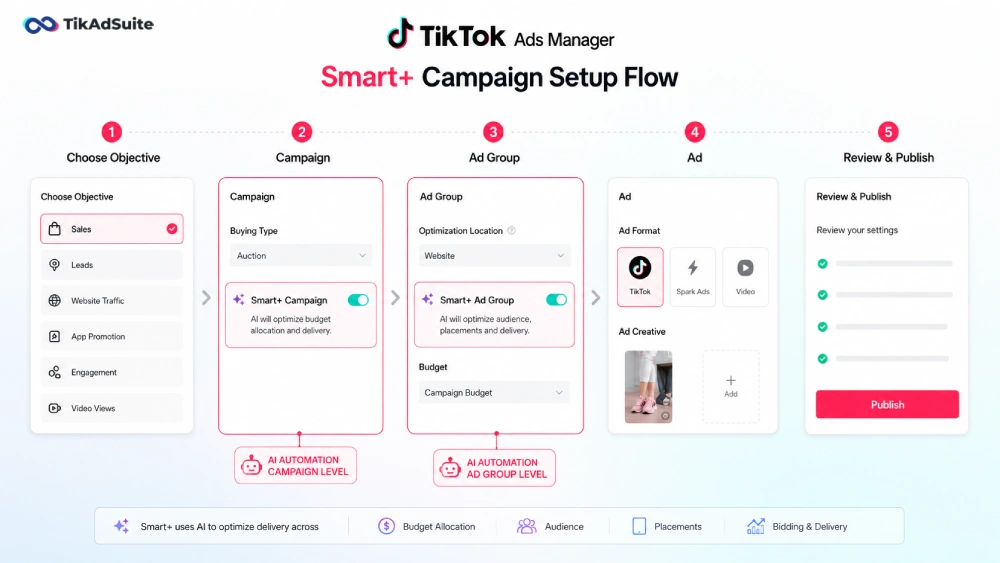
TikTok describes these campaigns as being “powered by AI for lead generation goals,” with the system working to get your ad in front of users who are most likely to submit a form.
For advertisers without deep targeting experience, that automation removes a lot of guesswork upfront. For more experienced media buyers, the trade-off is less granular control over audience segmentation.
A practical approach for new accounts: run a Smart+ campaign and a manually configured campaign side by side with equal budgets over two weeks. Let the performance data decide which direction to scale.
How to Set Up TikTok Lead Gen Ads: Step-by-Step
Getting your first campaign live is fairly straightforward once you know where each setting lives.
1. Log in to TikTok Ads Manager at ads.tiktok.com
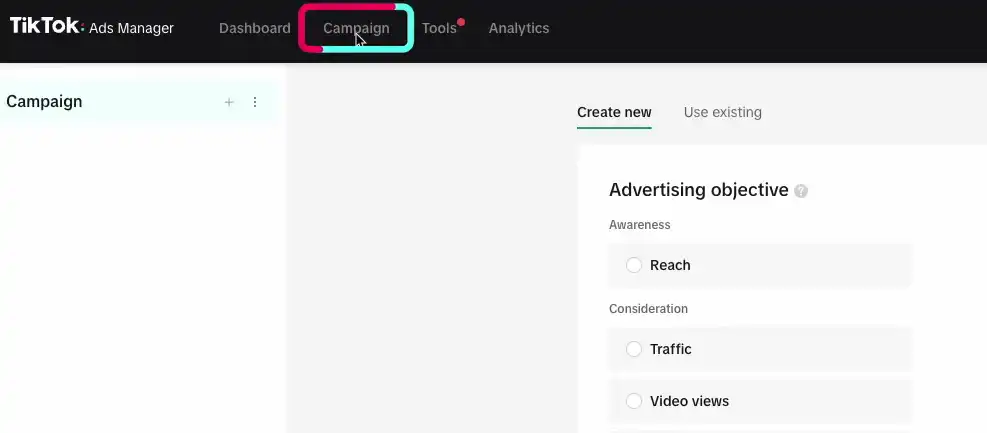
2. Click Campaigns, then Create
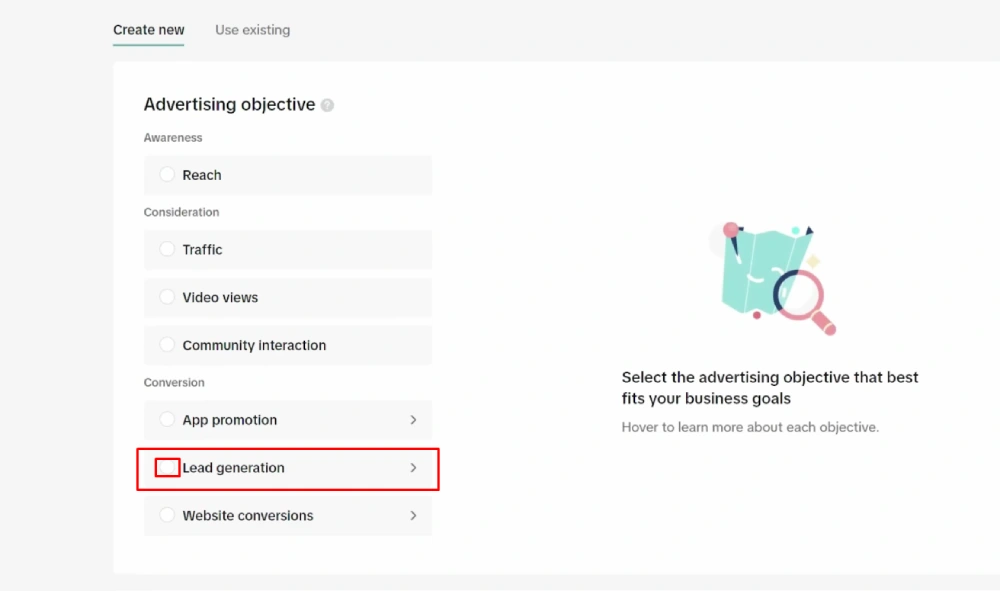
3. Select Lead Generation as your advertising objective
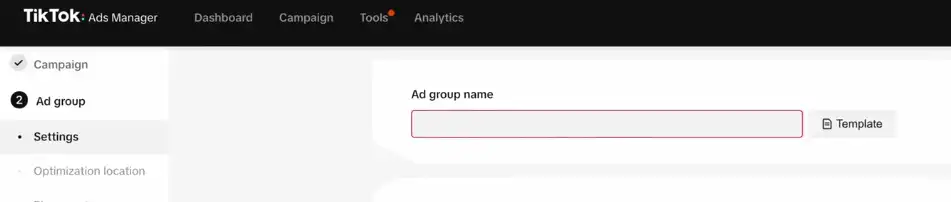
4. Click Continue and create a new Ad Group
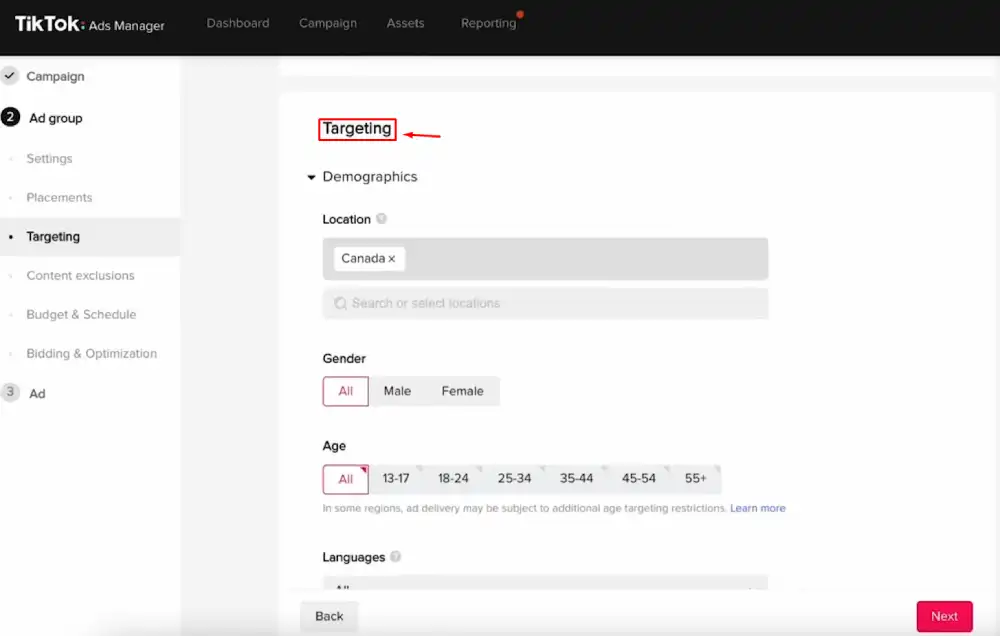
5. Define your audience, start broad for your first campaign; TikTok’s algorithm performs better when it has room to identify who responds
6. Set your daily budget; most practitioners recommend at least $50 per ad group per day to give the algorithm enough conversion signals to optimize
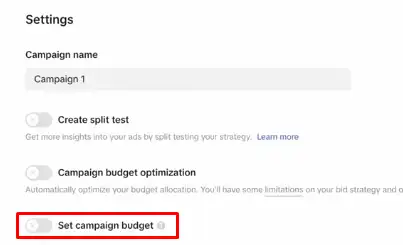
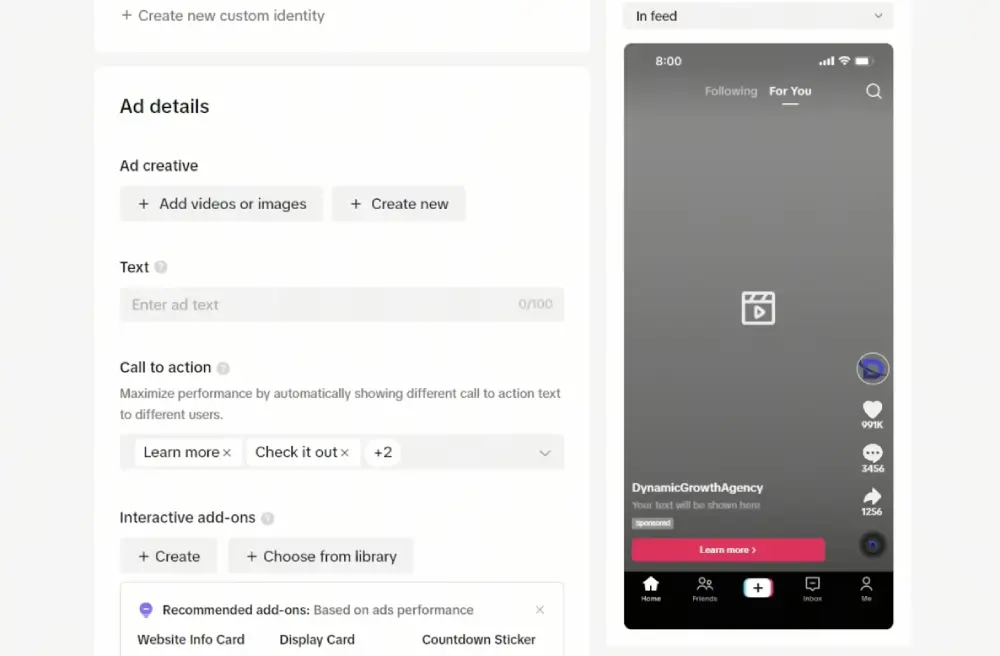
7. Create your ad, upload your video creative, and write the accompanying ad copy
8. Publish and let the campaign run without changes for the first three to four days
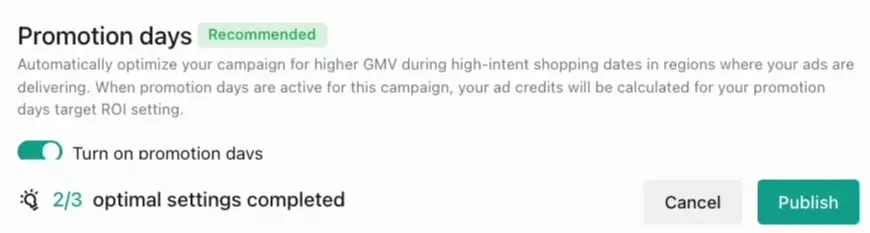
Pro tip: Exclude the Pangle placement from your early campaigns. Pangle extends reach into third-party apps, but it frequently generates accidental clicks from mobile game users, which degrades lead quality. Stick to the TikTok feed until you have a reliable performance baseline.
Connecting TikTok Leads to Your CRM
TikTok stores submitted leads inside Ads Manager, but does not push them to your CRM automatically or send real-time alerts when a new lead arrives.
If your sales team is checking Ads Manager manually, you are losing speed-to-lead time, and that matters more than most advertisers realize.
The MIT Lead Response Management Study by Dr. James Oldroyd found that contacting a lead within five minutes makes you 21x more likely to qualify them compared to waiting just 30 minutes. That window closes fast. (Source)
To automate lead delivery, you have a few solid options:
- TikTok’s native CRM integrations: Connect directly to platforms like Salesforce, HubSpot, and others through Ads Manager’s Lead Generation settings
- Zapier: Build an automated workflow that pushes new TikTok leads to your CRM, email platform, or Google Sheets
- LeadSync: A dedicated tool built specifically for syncing TikTok leads to CRMs like HubSpot, Pipedrive, and ActiveCampaign
Whichever route you take, set it up before your campaign goes live. A lead that sits uncontacted for several hours is worth a fraction of one that gets a follow-up call within minutes.
TikTok Lead Gen Ad Creative: What Actually Works
Your creative is not just one part of the campaign; on TikTok, it effectively is the targeting. The algorithm uses engagement signals from your video to determine who else should see it. If your ad loses people in the first few seconds, it does not reach the right audience at scale.
A structure that consistently drives form submissions is the Hook-Value-CTA framework:
- 0 to 3 seconds (The Hook): Address a specific pain point or use a pattern-interrupt visual. Skip logo intros entirely. Lead with something your target audience will actually stop scrolling for.
- 4 to 10 seconds (The Value): Show concretely how your product or service solves that problem. Vague benefit claims rarely convert.
- 11 to 15 seconds (The CTA): Give a clear, specific instruction, “Tap below to get the free guide” or “Fill out the form to book your call.”
Spark Ads, which amplify existing organic TikTok posts as paid ads, are worth prioritizing in your creative mix. According to 2026 benchmark data, Spark Ads deliver 2.4x higher click-through rates than standard in-feed creative and convert at a 44% higher rate, a gap driven by the authenticity that native creator content carries.
If you have an organic post already performing well, promoting it as a Spark Ad is one of the fastest performance wins available.
For context on where your campaigns should aim: based on Lebesgue’s benchmark analysis, the average CTR for conversion-optimized TikTok ads sits at 0.61%. Well-crafted, native-style creatives regularly outperform that by a meaningful margin.
Frequently Asked Questions
What is the minimum daily budget for TikTok lead gen ads?
TikTok Ads Manager allows ad group-level daily budgets starting at $20, but most practitioners recommend spending at least $50 per day to give the algorithm meaningful conversion signals. Going in below that threshold significantly extends how long it takes to exit the learning phase and start seeing reliable data.
How long does the TikTok lead gen learning phase take?
The learning phase typically requires around 50 lead submissions per ad group before performance stabilizes. How quickly you get there depends on your daily budget and your CPL. At $50 per day with a $10 CPL, that works out to roughly five leads per day, meaning you could exit the learning phase in about 10 days.
Can TikTok lead gen ads work for B2B businesses?
Yes, though results vary by industry and how well your creative fits the platform. TikTok’s user base has matured significantly, with over 36% of users now aged 25 to 44, an audience relevant to many B2B products. The key is building content that addresses professional pain points directly, not consumer-style content. Educational hooks and clear outcome-based CTAs tend to work best.
What types of businesses get the strongest results from TikTok lead gen?
Verticals that consistently perform well include e-commerce brands building email lists, financial services and insurance, real estate, education programs, automotive dealers, and local service businesses. The common thread is having a clear, simple offer that is easy to communicate in 15 seconds and an audience that is active on TikTok.
What makes an Instant Form convert well?
Keep it short. Three to five fields is the sweet spot, enough to qualify the lead without creating friction. Write a clear intro line at the top of the form that reinforces the offer, include your privacy policy link, and set up a thank-you page that tells leads exactly what to expect next. The pre-filled profile data handles most of the heavy lifting; your job is making sure the form feels worth completing.
How do I know if my TikTok lead gen campaign is actually working?
Track cost per lead as your primary metric and compare it against your target CPL. Also, watch your form completion rate, which tells you whether the people who tap your ad are actually submitting. A low completion rate usually points to too many form fields or an offer that is not compelling enough at the point of submission. Use the learning phase as a baseline and look for CPL trending downward as the algorithm optimizes.
Conclusion
Getting your CPL down is not purely about switching platforms. It is about removing friction at every stage of the funnel.
TikTok lead gen ads address the biggest pain point in mobile advertising: asking someone to leave the app, wait for a page to load, and fill in their details by hand. Take those steps away, and more people complete the form.
Your cost per lead drops as a result. Start with one campaign, keep the form short, connect your CRM before you go live, and give the algorithm room to learn. That combination handles most of the heavy lifting.