
If you sell on TikTok Shop, TikTok GMV Max is now the only ad format you have for Sales-objective campaigns.
As of July 2025, TikTok retired Video Shopping Ads, Product Shopping Ads, and LIVE Shopping Ads for new campaign creation.
Every TikTok Shop advertiser runs through GMV Max now, and that shift changes how you need to think about your ad strategy.
GMV Max is built around one goal: driving the highest possible gross merchandise value across every traffic source your shop touches.
You set a budget and a target return, and TikTok’s algorithm handles the rest, pulling from your paid ads, organic videos, and affiliate content simultaneously.
In this guide, you will learn:
- What TikTok GMV Max actually is and how it works under the hood
- The difference between the two campaign types and when to use each
- A step-by-step setup walkthrough for TikTok Ads Manager
- How to set a realistic ROI target from the start
- Creative strategy and practical optimization tips
- What the attribution model actually measures, and what it does not
Whether you are new to TikTok Shop ads or migrating from older formats, this is everything you need to run GMV Max with confidence.
Get Up to $6000 Free TikTok Ad Credit
Table of Contents
Key Takeaways
- GMV Max replaced all other TikTok Shop Sales-objective ad formats starting July 2025
- It automatically allocates spend across paid ads, organic content, and affiliate videos to drive purchases
- Two campaign types exist: Product GMV Max for catalog promotion and LIVE GMV Max for livestream events
- TikTok confirmed there is no hard creative minimum, but more authorized content means faster algorithm learning
- Always follow TikTok’s recommended ROI target on your first campaign, then adjust as data builds
What Is TikTok GMV Max?
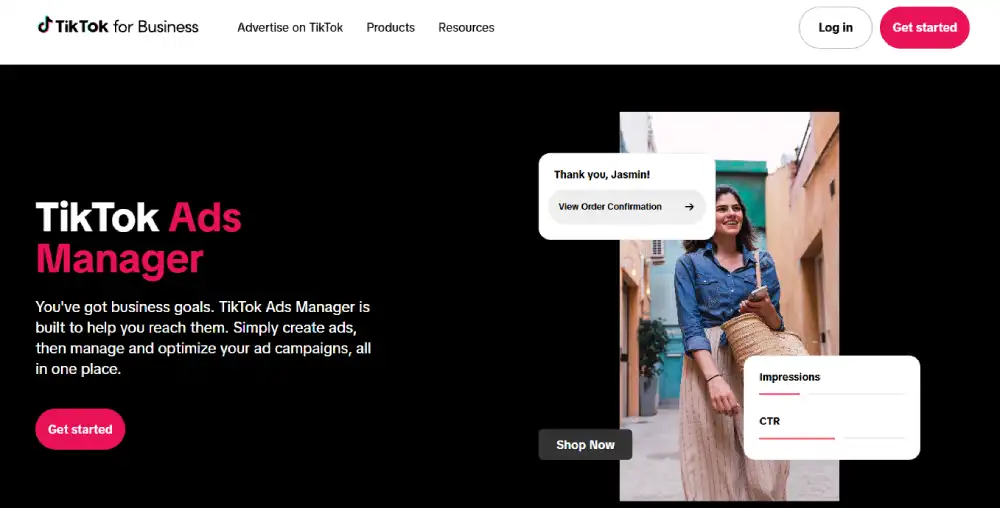
TikTok GMV Max is a fully automated ad campaign type built exclusively for TikTok Shop. Rather than optimizing for clicks or reach, it is designed around a single metric: gross merchandise value, which is the total sales revenue generated through your shop before fees, refunds, or ad costs.
You provide three inputs: your daily budget, an ROI target, and the products you want to promote.
TikTok’s system then decides which creatives to run, which audiences to reach, and how to distribute spend across placements.
What separates GMV Max from standard TikTok ads is how it handles attribution. According to TikTok’s official documentation, all orders from promoted products are attributed to your GMV Max campaign, including sales driven by organic content and affiliate posts. (Source)
So if a creator’s video featuring your product drives a sale, and that product is in your campaign, that sale counts toward your campaign results.
This broad attribution model is worth understanding before you evaluate performance. Your reported GMV includes sales that may have happened organically, which means platform numbers can look stronger than your net ad-driven return.
Product GMV Max vs. LIVE GMV Max
TikTok Ads Manager offers two distinct GMV Max campaign types, and choosing the right one depends on how you sell.
Product GMV Max runs continuously. It promotes your product catalog across TikTok’s shoppable placements, including the For You feed, TikTok Search, the Shop Tab, and TikTok Pangle. Most brands use this as their always-on baseline, keeping it live regardless of promotions or events.
LIVE GMV Max is designed for livestream shopping events. It pushes traffic directly into your TikTok LIVE session, optimizing for gross revenue during the broadcast.
TikTok recommends launching LIVE GMV Max campaigns at least three days before your stream, and the campaign must run for a minimum of three days to allow the algorithm to build delivery.
If you host livestreams regularly, running both formats simultaneously is worth considering, with Product GMV Max covering your catalog around the clock and LIVE GMV Max activating in the lead-up to each broadcast.
How to Set Up a Product GMV Max Campaign
Setting up GMV Max is straightforward once your TikTok Shop is connected to your Business Center.
Here is how to do it in TikTok Ads Manager:
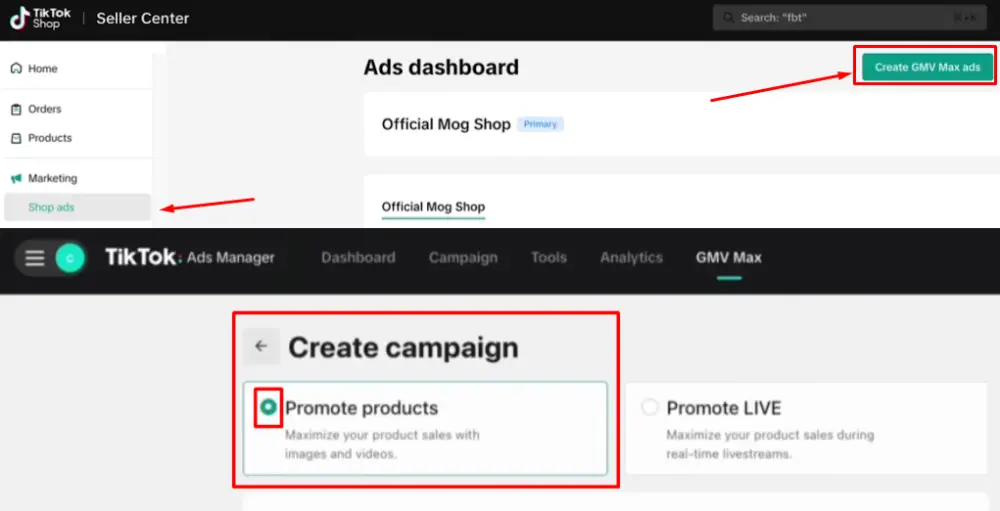
1. Log in to TikTok Ads Manager and click GMV Max at the top of the dashboard
3. Click Create GMV Max ads, then choose Promote products
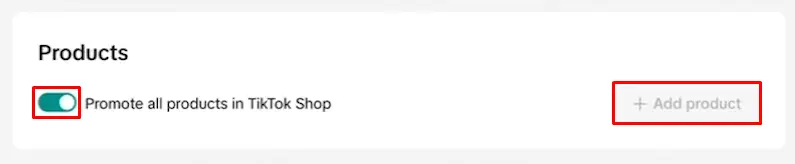
4. Choose your products: either promote your full catalog or select specific items
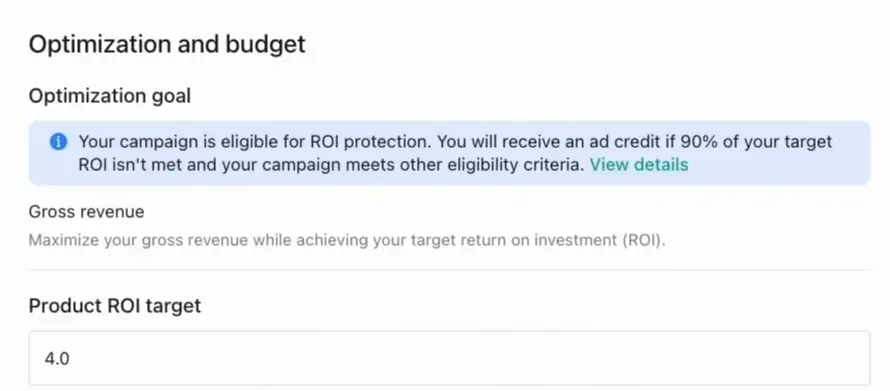
5. Set your ROI target in the Optimization goal section
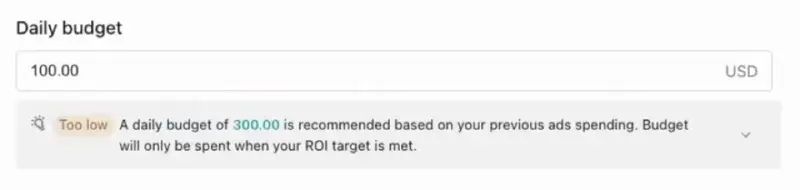
6. Set your daily budget, using TikTok’s suggested amount as your starting point
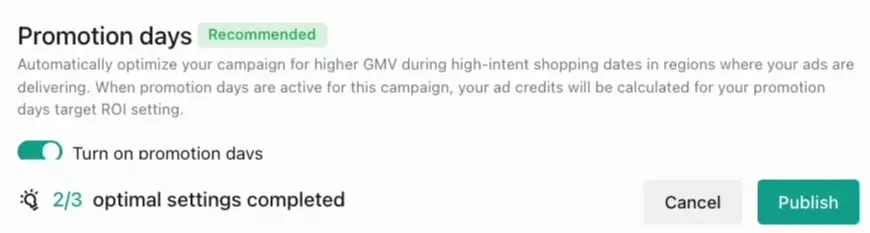
7. Give all the settings a final check and then click Publish
Once the campaign goes live, any Video Shopping Ads or Product Shopping Ads running for those same products will be paused automatically across all connected ad accounts. TikTok does not restart them when the GMV Max campaign ends, so plan accordingly if you want to reactivate older formats.
You can also launch campaigns directly from TikTok Seller Center by going to Shop Ads and selecting Create GMV Max ads.
How to Set Your ROI Target
Your ROI target is the ratio of revenue to ad spend you want the campaign to hit. Set it at 4.0x, and TikTok’s system will work to generate $300 in GMV for every $100 you spend.
When you create your first campaign, TikTok will suggest an ROI target based on your shop’s sales history. Start with that recommendation rather than pushing for something higher.
Setting an aggressive target too early causes the algorithm to restrict delivery while it hunts for a narrow slice of buyers who meet that threshold, which slows the learning process and reduces spend efficiency.
Once the campaign has run for at least seven days and built up a meaningful order volume, you can raise the target gradually. Small, steady adjustments give the algorithm time to recalibrate rather than forcing a hard reset.
TikTok also provides ROI Protection for qualifying campaigns. If your campaign’s daily ROI falls below 90% of your stated target, TikTok issues ad credits to cover the gap, provided the campaign generated more than 20 orders on that day.
To stay eligible, avoid editing your products, adjusting the ROI target, or pausing the campaign mid-day, as each of those actions voids protection for that specific day.
Building a Creative Library That Performs
GMV Max automates creative selection, but it only optimizes what you give it. The more authorized content TikTok can test, the faster it finds what drives purchases for your specific products and audience.
TikTok confirmed there is no hard creative minimum to launch a GMV Max campaign. That said, a larger, more diverse content pool helps the algorithm move through the learning phase faster and find strong-performing assets more efficiently.
A few things that make a real difference in practice:
- Authorize affiliate content before you launch. In Seller Center, go to Shop Ads, then Manage Account, then Available TikTok Accounts. If a creator’s videos are not showing up, they likely have not enabled ad usage in their account settings. Ask them to do so before the campaign goes live.
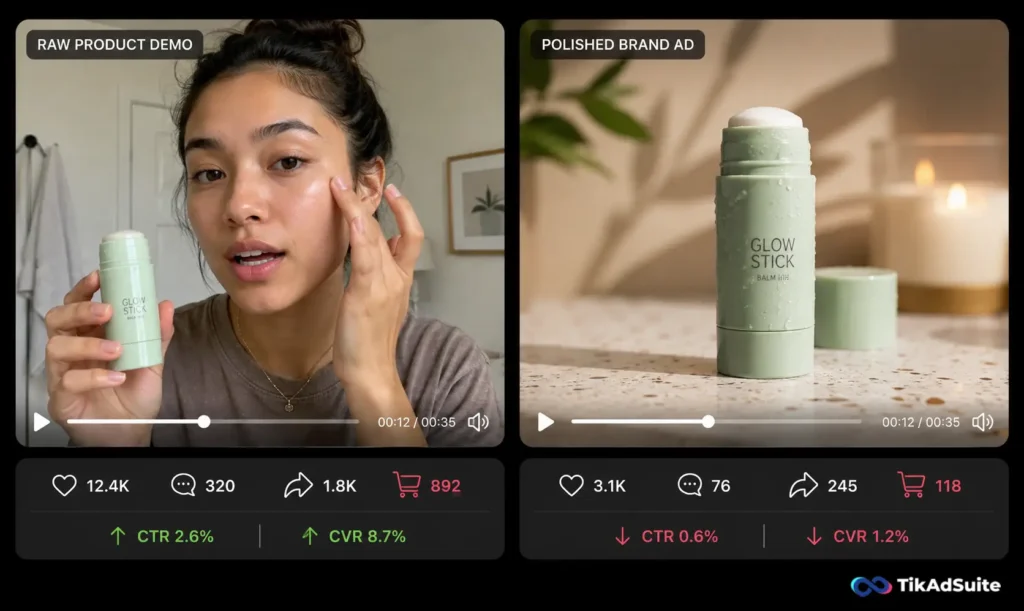
- Authenticity tends to win over production value. Raw product demos and genuine customer reviews consistently outperform polished brand ads on TikTok. Lean into that rather than fighting it.
- Refresh your content pool regularly. The algorithm naturally favors newer creative variations over time. Bringing in fresh videos every few weeks keeps performance from plateauing as the campaign matures.
How Attribution Works in GMV Max
GMV Max uses a one-day attribution window for same-day orders, and it attributes broadly across all traffic types.
Any sale of a promoted product, whether it came from a paid ad, an organic video, or an affiliate post, appears in your GMV Max campaign dashboard.
This is a meaningful departure from how attribution works on most other ad platforms. On Meta or Google, your campaign data typically reflects only sales driven by paid placements.
On GMV Max, you are seeing shop-wide performance for the products you are promoting, including sales that your organic content would have generated anyway.
Before scaling your budget or raising your ROI target, cross-reference your GMV Max dashboard against your total shop revenue in Seller Center.
That comparison helps you isolate how much of the attributed GMV is genuinely incremental versus organic activity that was going to happen regardless.
Practical Tips That Improve GMV Max Performance
Leave the campaign alone during the learning phase. Editing products, changing your ROI target, or pausing the campaign resets what TikTok has learned. Give it at least seven days of uninterrupted delivery before making any adjustments. Campaigns with higher daily order volume tend to move through this phase faster.
Be selective about which products you promote. Not every item in your catalog benefits equally from GMV Max. Products with strong video content, stable demand, and healthy margins tend to get the most out of the format. Promoting low-margin items with high refund rates can inflate your reported GMV while quietly hurting profitability.
Layer in TikTok Search Ads. GMV Max handles broad algorithmic discovery, but it does not target people actively searching for your product by keyword. Search Ads fill that gap. The two formats work alongside each other without competing for the same inventory.
Track cost-per-order alongside GMV. GMV Max optimizes for revenue volume, not profitability. Monitoring cost-per-order gives you a more honest view of whether the campaign is driving economically sound growth, especially as you scale the budget.
Frequently Asked Questions
What does GMV stand for in TikTok GMV Max?
GMV stands for Gross Merchandise Value. It refers to the total value of products sold through your TikTok Shop before deducting fees, refunds, or advertising costs. GMV Max is named for its core objective: maximizing that number across paid, organic, and affiliate traffic sources simultaneously.
Can I still run other TikTok ad types alongside GMV Max?
Yes, with some caveats. TikTok Search Ads are fully compatible and can run at the same time without conflict. For details on how the migration affects existing Video Shopping Ads and Product Shopping Ads, TikTok’s official migration guide covers the transition rules and timeline.
How long does it take for GMV Max to exit the learning phase?
Most campaigns reach stable delivery within 7 to 14 days, depending on daily order volume and budget. Avoid making changes during this window. Edits reset the algorithm’s learning, which extends the time before you see consistent results.
Is GMV Max available in all countries?
GMV Max is available in all markets where TikTok Shop operates, including the United States, the United Kingdom, Indonesia, Malaysia, the Philippines, Thailand, Vietnam, and Singapore, among others. Availability expands as TikTok Shop launches in new regions.
What is ROI Protection, and how does it work?
ROI Protection is a TikTok-managed safety net that issues ad credits when your campaign’s daily ROI falls below 90% of your stated target. To qualify, your campaign must generate more than 20 orders in a day and must not have been edited on that day.
What happens to my existing Shopping Ads after I launch GMV Max?
When a Product GMV Max campaign goes live for specific products, any Video Shopping Ads or Product Shopping Ads promoting those same products are paused automatically across all connected ad accounts. TikTok does not restart them automatically when the GMV Max campaign ends. See TikTok’s migration documentation for the full breakdown.
Wrapping Up
GMV Max is a capable system, but it is not a passive one. It responds to what you feed it: the quality of your creative library, the realism of your ROI target, and the products you choose to promote all shape how well it performs.
Get those inputs right from the start, resist the urge to adjust things too early, and track profitability alongside the platform’s own revenue numbers.
That combination gives you a much clearer picture of what GMV Max is actually doing for your business.