
You have a product, a budget, and a goal to sell more on TikTok. Now comes the hard part. Do you pay a creator to talk about your product, or do you run paid ads through TikTok Ads Manager?
Both can work. Both can also drain your budget if you pick the wrong one for your goal. The right choice depends on what you sell, who you want to reach, and how fast you need results.
Here is what you will learn in this guide:
- The real difference between TikTok influencers and TikTok ads
- What each option actually costs, backed by verified data
- Which one drives better return for different goals
- Real case studies from brands that used each approach
- How to combine both for stronger results
By the end, you will know which path fits your brand right now. You will also see why the smartest brands stop treating this as an either-or choice.
Get Up to $6000 Free TikTok Ad Credit
Table of Contents
Key Takeaways
- TikTok influencer partnerships rely on trust and creator voice, while TikTok ads rely on paid reach and precise targeting.
- Creator content earns more engagement than brand content. TikTok sees 83% higher engagement on creator-made branded posts compared to brand-made posts, according to Sprout Social.
- TikTok ads give you full control over budget, audience, and timing, which influencers cannot match.
- Influencers cost less to start but are harder to scale and measure than paid ads.
- The strongest brands blend both by turning top creator videos into paid Spark Ads.
What Is the Difference Between TikTok Influencers and TikTok Ads?
TikTok influencer marketing means you pay a creator to make content about your product. Their followers see it as a recommendation from someone they trust. TikTok ads mean you pay TikTok directly to show your video to a chosen audience. You control who sees it, when, and how often. One borrows trust. The other buys attention.
How TikTok Influencer Marketing Works
You find a creator whose audience matches your buyer. You agree on a fee, a deliverable, and a timeline. The creator makes a video in their own style and posts it to their followers.
The power here is trust. People follow creators because they like them. So a product mention feels like advice from a friend, not a sales pitch.
This trust shows up in buying behavior. Sprout Social reports that 86% of consumers make at least one influencer-inspired purchase each year. That kind of pull is hard to fake with a banner or a hard-sell ad.
Smaller creators are gaining ground. Influencer Marketing Hub’s 2026 Benchmark Report shows brands shifting their creator mix down-market, with nano and micro creators rising while macro and celebrity deals stay mostly flat. Smaller audiences feel more personal, so people tend to interact more.
How TikTok Ads Work
You build a campaign inside TikTok Ads Manager. You pick a goal, set a budget, choose your audience, and upload your video. TikTok then shows your ad to people who match your targeting.
You decide everything. Age, location, interests, and behavior are all in your hands. You can start, pause, or scale a campaign in minutes.
This control is the big advantage. You are not waiting on a creator’s posting schedule or hoping their audience fits. If you want to test a new offer with women aged 25 to 34 in Texas tomorrow, you can. New advertisers can even claim TikTok ad credit to test the platform with less risk.
The trade-off is that ads can feel less personal. People know they are being sold to. That is why ad creative needs to feel native, not polished and corporate.
TikTok Influencers vs TikTok Ads: Side-by-Side Comparison
Here is how the two stack up across the things that matter most to your budget and your goals.
| Factor | TikTok Influencers | TikTok Ads |
| Main strength | Trust and authentic voice | Control and precise targeting |
| Cost to start | Low to medium per creator | Flexible, set your own budget |
| Speed to launch | Slower, needs outreach | Fast, launch same day |
| Scalability | Harder to scale | Easy to scale up or down |
| Measurement | Trickier to track sales | Clear metrics and attribution |
| Audience control | Limited to creator’s followers | Full targeting control |
| Best for | Brand trust and awareness | Direct sales and retargeting |
Neither column is the winner for every brand. The right pick depends on the row that matters most to you right now.
Are TikTok Influencers Cheaper Than TikTok Ads?
Influencers usually cost less to start, but ads are easier to predict and scale. A nano or micro creator might post for a small flat fee or free product.
With ads, you control the exact spend down to the dollar. The catch is that influencer costs are one-off and hard to repeat at scale, while ad costs are ongoing but fully measurable.
For paid campaigns, you can see the real numbers. WebFX reports that TikTok ads average a CPM of $9.16 and a CPC of around $1.00, which keeps the platform cost-efficient for reach.
Knowing these benchmarks helps you plan before you spend. If you want a deeper breakdown, our guide on TikTok ads cost walks through every fee.
Influencer pricing has no fixed rate card. One creator may charge $50, another $5,000, for similar reach. That makes budgeting harder, but it also leaves room for smart deals with rising creators.
Which Gives Better ROI, TikTok Influencers or TikTok Ads?
It depends on your goal and how you measure. Ads give you clear, trackable return because every sale ties back to a campaign. Influencers can drive strong long-term value through trust, but the results are harder to attribute. For fast, measurable sales, ads usually win. For brand love and repeat buyers, influencers often deliver more.
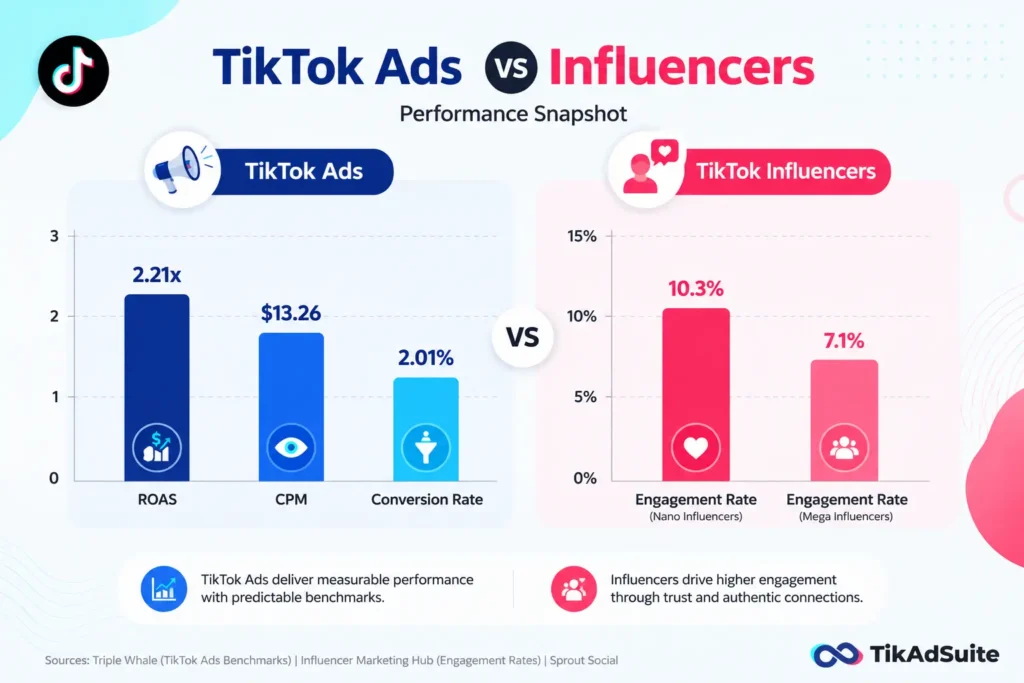
Here are the current ad benchmarks to ground your expectations. Triple Whale reports that TikTok’s 2025 median CPM reached $13.26, with an average conversion rate of 2.01% and a ROAS of 2.21 across ecommerce brands. (Source) These numbers are rising, so creative quality matters more than ever.
The influencer side is harder to pin to one ROAS figure. The value often shows up later as repeat purchases and word of mouth. That long tail is real, but it does not fit neatly into a dashboard.
Case Study: TikTok Influencer Marketing in Action
KFC wanted to reintroduce its Twister Wrap to a younger crowd. Instead of a standard ad, it partnered with creators known as the TurnUp Twins, who write catchy jingles.
The creators made a song-based video in their signature style. When the video ran on KFC’s brand account, it earned a 4% engagement rate, far above the 0.25% average for similar brands, according to Sprout Social.
The result was a cultural moment, not just an ad. Fans flooded the comments asking for the jingle to become a real commercial.
That kind of organic demand is exactly what creator partnerships do best. The trust and creativity of the right creator turned a product reintroduction into something people actually wanted to share.
Case Study: TikTok Ads in Action
Salon Hagel took the paid route. The haircare retailer wanted to drive online store sales while keeping its cost per conversion low.
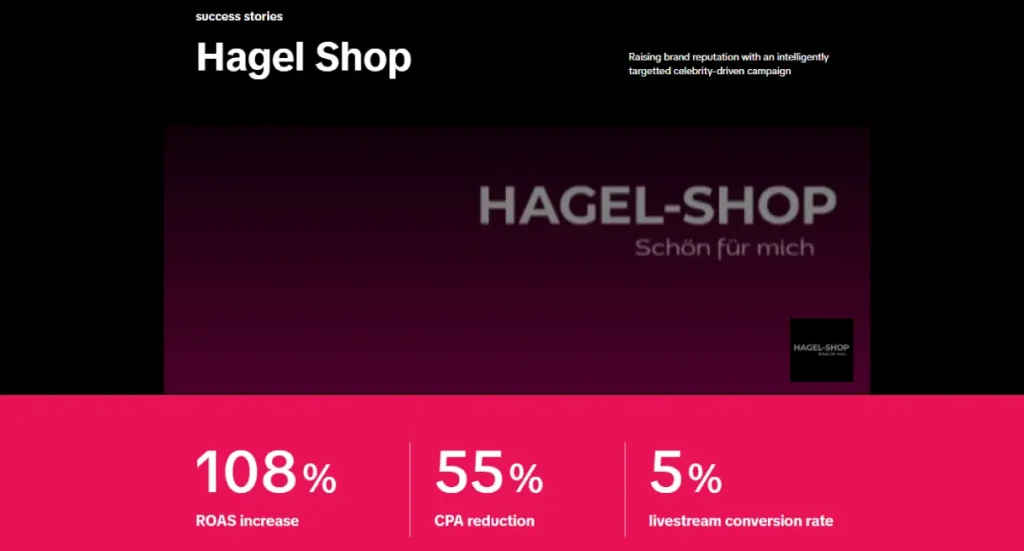
It ran a two-month conversion campaign using Spark Ads built around well-known celebrity faces. The results were strong. Salon Hagel saw a 108% jump in ROAS to 10.8, a 55% drop in cost per acquisition, and a 5% livestream conversion rate, as reported in this TikTok for Business case study.
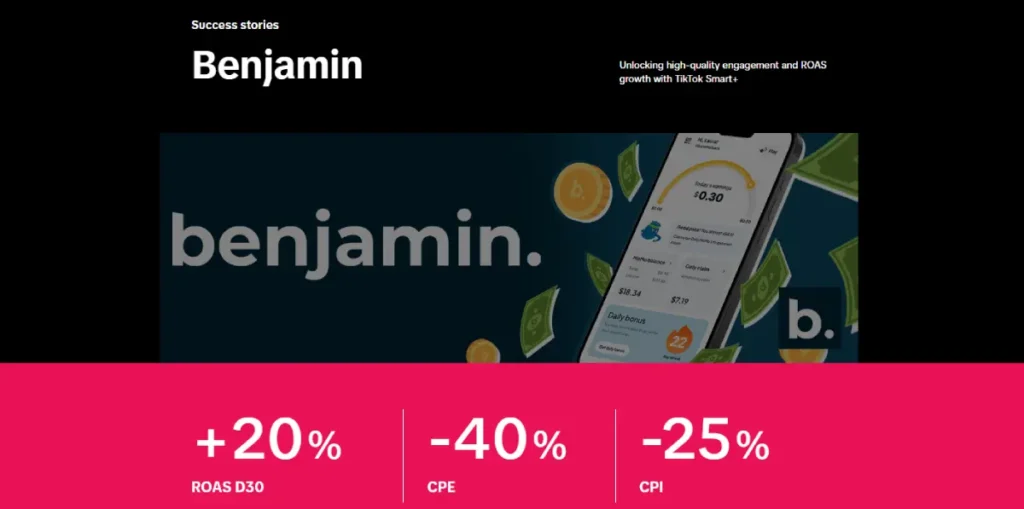
The gaming app Benjamin saw similar efficiency gains with smarter targeting. Its campaign lifted Day 30 ROAS by 20% while cutting cost per install by 25%, according to TikTok for Business.
Both brands won by letting TikTok’s tools optimize toward real outcomes, not just clicks. If you want results like these, study our breakdown of how to create winning TikTok ads.
When Should You Use TikTok Influencers?
Pick influencers when trust and awareness are your top goals. They shine in a few clear situations.
- You are launching a new product and need credible voices to vouch for it
- You sell something visual or personal, like beauty, food, or fashion
- You want to reach a niche community that follows specific creators
- Your brand is new and needs social proof before people will buy
- You want content that feels real, since UGC outperforms polished ads
Influencers also help you build a content library. With permission, you can reuse their videos in your own UGC-style TikTok ads later.
When Should You Use TikTok Ads?
Pick ads when you need control, speed, and measurable sales. They are the better tool for performance goals.
- You want fast, trackable results tied to a clear budget
- You need to retarget people who already visited your store
- You are scaling a proven offer to a larger audience
- You want to test multiple audiences and creatives quickly
- You need precise control over who sees your message and when
Ads also let you grow at your own pace. When something works, our guide on how to scale TikTok ads shows how to push spend without breaking performance.
Why Combining TikTok Influencers and Ads Works Best
You do not have to choose just one. The smartest brands run both, and they feed each other.
Here is the play. A creator makes a video that performs well on their account. You then turn that exact video into a paid Spark Ad, which boosts authentic creator content with paid reach. You get the trust of an influencer plus the targeting power of ads.
This blend works because creator content already earns more attention. TikTok sees 83% higher engagement on creator-made branded content than on brand-made content, per Sprout Social. Paying to amplify that content gives you the best of both worlds.
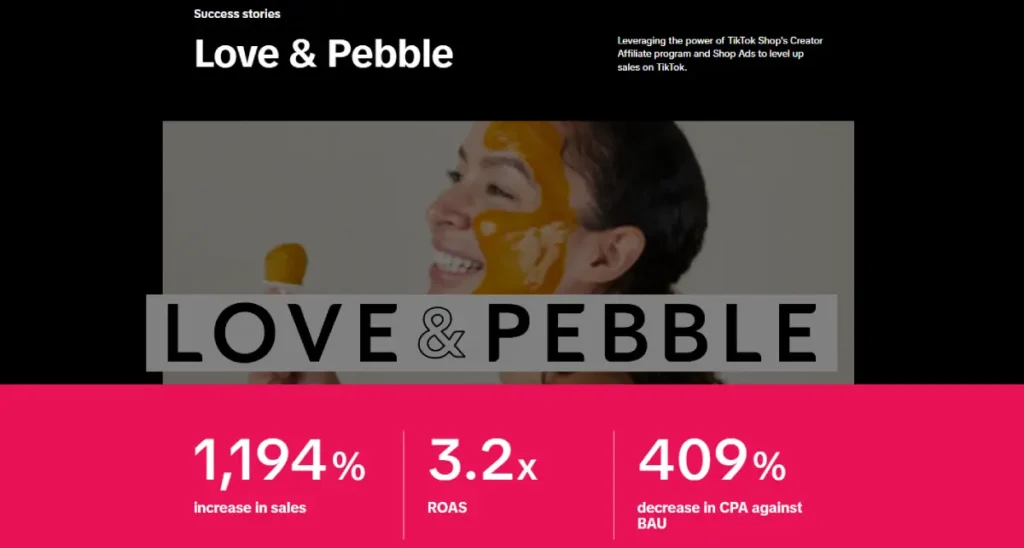
The brand Love & Pebble proved this. By combining organic posts, creator affiliate videos, and paid Shop Ads, it drove a 1,194% increase in sales overall, as shown in this TikTok for Business case study. The affiliate-driven ads alone hit a 3.2x ROAS. You can build this same flywheel through affiliate marketing on TikTok Shop.
Frequently Asked Questions
Do TikTok influencers or ads work better for small businesses?
Small businesses often start with micro-influencers because the cost is low and the trust is high. A single creator post can drive real sales without a big budget. Once you have proven content and a clear offer, paid ads let you scale that success to a wider audience with predictable spend and trackable results.
How much do TikTok influencers charge compared to ads?
Influencer fees vary widely, from free product deals with nano creators to thousands of dollars for popular ones. There is no fixed rate. TikTok ads, by contrast, let you set any budget you want, often starting around $20 to $50 per day. Ads give you cost certainty, while influencer pricing depends on each creator’s audience and demand.
Can I use influencer videos as TikTok ads?
Yes, and you should. With the creator’s permission, you can run their video as a Spark Ad through TikTok Ads Manager. This boosts the authentic content with paid targeting and reach. It often outperforms brand-made ads because viewers trust the creator’s voice more than a polished corporate clip.
Which option is easier to measure?
TikTok ads are far easier to measure. Ads Manager shows you clicks, conversions, cost per sale, and ROAS in real time. Influencer results are harder to track because sales may come days later through search or word of mouth. Affiliate codes and tracked links help close that gap, but ads still offer cleaner attribution.
Wrapping Up
TikTok influencers and TikTok ads are not rivals. They solve different problems, and they work best together.
If you need trust and awareness, start with creators. If you need fast, measurable sales, start with ads. If you want the strongest results, take your best creator content and amplify it with paid Spark Ads.
The single most useful move you can make today is simple. Find one creator video that resonates, then put paid budget behind it. That one step blends authenticity with reach, and it is where most winning TikTok brands begin.