
Scaling TikTok ads sounds simple until your ROAS drops the day after you raise the budget. You find a winning campaign, push more money into it, and your cost per purchase jumps while returns fall.
In most cases the platform isn’t broken. How you raised the budget is.
TikTok’s ad system learns who converts for your specific creative, and sharp changes force it to learn again on your money.
Here’s what you’ll find below:
- When a campaign is actually ready to scale, using TikTok’s own thresholds
- How far and how often to raise budgets without resetting performance
- Vertical, horizontal and rule-based scaling, and when to use each
- Creative refresh and bidding choices that protect ROAS as spend grows
- How to judge a healthy ROAS for your own margins
It is written for advertisers already running TikTok campaigns who want more spend without giving back their results.
Get Up to $6000 Free TikTok Ad Credit
Table of Contents
Quick Answer
To scale TikTok ads profitably, wait until an ad group meets TikTok’s conversion threshold for scaling, then raise the budget in moderate steps with a pause between changes. Add spend sideways by duplicating winners into new audiences, keep new creatives coming before old ones fatigue, and use bidding such as Cost Cap or value-based optimization when you need to hold efficiency at higher budgets.
Key Takeaways
- Scale only after TikTok’s own readiness bar is met, not after one good day.
- Raise budgets in steps inside the range TikTok recommends, and give each change at least a couple of days to settle.
- Duplicating a winning ad group into a new audience (horizontal scaling) disturbs less than editing the winner.
- Creative is usually the first thing to break at higher spend, so build a steady supply of new hooks before you scale.
- Judge ROAS against your own break-even point, and measure with TikTok’s view-through data as well as last-click tools.
Why ROAS Crashes When You Scale TikTok Ads
ROAS usually drops after a big budget jump because the system has to spend more money right away and reaches people who are less likely to buy. TikTok runs an auction, and a larger daily budget pushes delivery past your best-converting viewers.

TikTok’s help article on the learning phase says performance volatility starts to decline after about 25 campaign results or 7 days, and warns against edits that send a campaign back into learning. A large budget change on a stable ad group can do exactly that, so your cost per action swings again.
Three forces hurt ROAS at scale:
- The auction problem: more spend means buying more inventory. Once the best segment is used up, each extra conversion costs more.
- The learning problem: sudden changes push the algorithm to recalibrate, which means less efficient delivery for a while.
- The fatigue problem: higher spend shows your ad to the same people more often, so it wears out faster.
Knowing which of these you’re facing tells you which fix to use.
The Pre-Scaling Checklist: When Are You Actually Ready to Scale?
You’re ready to scale when results are stable, tracking is clean and you have creative waiting. Scaling makes existing patterns bigger, good and bad, so an unstable campaign gets more unstable with more money.
Check each of these before you touch the budget:
- Meet TikTok’s readiness bar: TikTok’s page on scaling auction ad spend says conversion campaigns are ready when an ad group generates at least 50 conversions within a week and meets your performance targets, while non-conversion campaigns should be spending 90 to 100% of budget with cost per action at or below target.
- Look for a steady run, not one spike: a single great day does not prove a winner. Wait until results hold across several days in a row.
- Have creative ready: prepare several new video variations before you scale, because higher budgets use up creative faster.
- Check tracking: if your pixel or events are wrong, the system optimizes for the wrong signals. Verify your TikTok Pixel events in Events Manager first.
Note for app advertisers: TikTok’s SAN integration notice says its legacy integration with mobile measurement partners was discontinued starting March 31, 2025. If app results look stalled despite healthy spend, confirm your MMP is set up with the newer Self-Attributing Network integration.
Vertical Scaling: How to Increase Budget Without Breaking Performance
Vertical scaling means raising the daily budget on an ad group that is already winning. It is the quickest way to add spend, but it carries more risk than horizontal scaling because you change something the system has already tuned.
Stay Inside TikTok’s Budget Range
TikTok’s help page on campaign budgets advises raising a budget by no more than 40% per change while the campaign is in the learning phase, no more than 30% per change after it exits learning, and not adjusting more often than every two days.
A separate TikTok page on budget best practices gives a looser range: keep the budget within 50% of the previous budget after learning, wait at least 2 days between targeting, bid or budget changes, and set purchase-type campaigns at 10 times your current CPA or more. When the two pages differ, the stricter limits on the budget page are the safer ones to follow.
Treat that range as the upper limit, not the target. Smaller steps make it easier to see whether the change helped.
A simple routine for safe vertical scaling:
- Review full days of data only, not today’s partial numbers.
- If ROAS meets your target, raise the budget by a moderate step inside TikTok’s range.
- Change nothing else on the ad group at the same time.
- Wait at least two days before the next change.
If ROAS drops after an increase, give it time before reacting. If it does not recover, go back to the previous budget. Stacking more changes on top usually makes it worse.
Budget Monitoring and Pacing
Pacing tells you whether the system can actually use the money you give it. Check daily how much of each ad group’s budget is spent and what each conversion costs:
- Spending most of the budget at or below target cost: room to scale.
- Underspending: the budget is not the limit. Look at bids, audience size or creative before adding more.
- Spending fully but cost per action rising: you are near the ceiling for this ad group.
When Vertical Scaling Stops Working
Every ad group hits a ceiling. Past that point, more budget brings smaller returns because the system has run out of high-value buyers within your current setup. That is when horizontal scaling takes over.
Horizontal Scaling: The Safer Path to Bigger Spend
Horizontal scaling means duplicating a winning ad group and pointing the copy at a new audience. You add total spend without disturbing the original ad group that is already working.

Duplication Without Disruption
When you duplicate a winning ad group:
- Keep the winning creative the same in the new copy
- Change only the targeting (a new audience, a new interest set, or broad)
- Start the new ad group at or below the original’s current budget
- Let the copy go through its own learning phase without edits
Leave the original alone. The goal is two profitable ad groups, not one that steals from the other.
Broad Targeting as a Default
Broad targeting gives the system fewer limits and lets your creative do the filtering. Setting targeting to age, gender and location only, with no interests or behaviors, makes the system find buyers mostly from how people respond to your video.
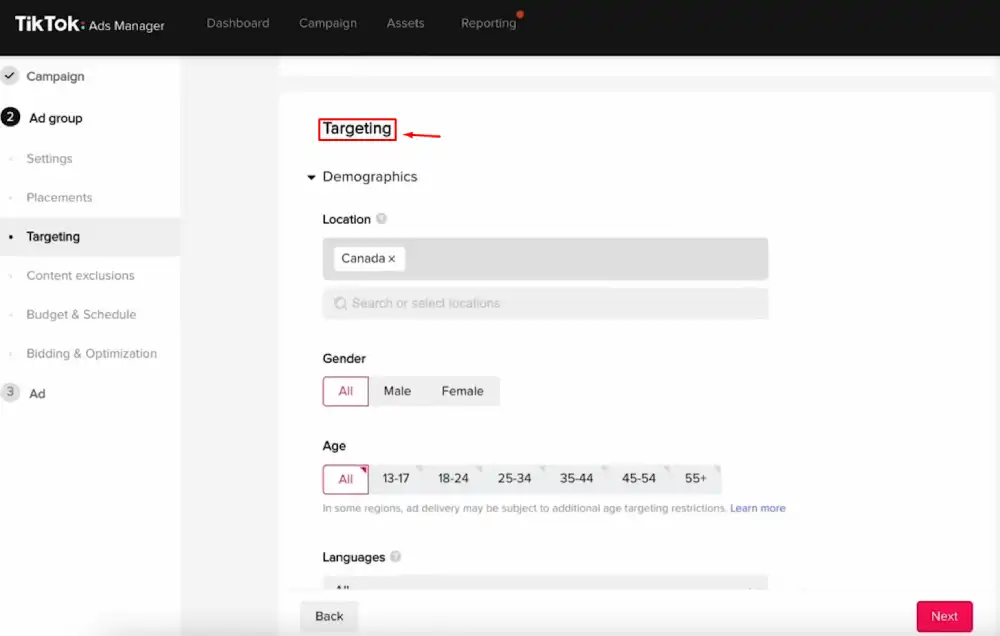
This works best when the video has a clear hook that calls out the right person, such as a line aimed at runners who hate foam rolling. Test broad against your interest-based ad group in separate ad groups and keep the one that wins for your product.
Lookalike Audiences: When to Add Them
Once you have a solid list of past buyers, build lookalike audiences from that seed data. Useful seed lists include:
- Purchasers, for the highest buying intent
- Add-to-cart users, for more volume at lower intent
- Video viewers, for top-of-funnel reach
- Your best customers from your email list, for high-value buyers
Run each lookalike as its own ad group so you can compare them.
Surf Scaling: The Advanced Protocol for Intraday Budget Optimization
Surf scaling means raising spend only on days when early results are strong, then dropping back to your normal budget. It lets you catch good days without locking in a higher budget for every day.
The idea is simple. Auction results vary from day to day, so instead of holding a fixed high budget, you use automated rules to add spend only when the data says the day is working.
Setting Up Automated Budget Rules
Inside TikTok Ads Manager, set up automated rules for each ad group you scale. The values below are yours to choose based on your targets.

Rule 1: The surge rule
- Condition: ROAS is above your target and spend has passed a level you trust by midday
- Action: raise the daily budget by a moderate step
- Purpose: adds money only on days that are already working
Rule 2: The reset rule
- Condition: end of the day
- Action: set the budget back to your normal baseline
- Purpose: stops a one-day surge from becoming your new budget
Rule 3: The kill switch
- Condition: spend passes a set amount with zero conversions today
- Action: pause the ad group
- Purpose: stops a bad day from draining budget before you can step in
Keep TikTok’s budget guidance in mind here too. Rules that change budgets very often can work against the advice to give each change time to settle, so test this on one ad group first.
Creative Velocity: The Real Bottleneck at Scale
Creative is the limit most campaigns hit first when they scale. Budget and targeting get the attention, but a higher budget shows the same video to more people more often, and even a strong ad wears out.
How fast that happens depends on your spend, your audience size and your product, so watch your own numbers instead of a fixed calendar.
Why Ad Fatigue Hurts Your ROAS First
When people have seen your video several times, they stop engaging. Click-through rate falls, watch time drops and the ad looks less relevant to the system, which tends to raise your costs and weaken delivery. The best benchmark is your own: compare your current CTR to the same ad’s first week.
The Hook Refresh Method
You don’t need a brand-new concept every week. The quickest refresh is to change only the opening of a winning video and keep the rest.
The hook decides whether someone watches or scrolls. Testing several hooks on the same body can stretch the life of a winning concept without a full reshoot. Hook styles worth testing:
- Bold on-screen text that names a problem
- A pattern interrupt, such as an unexpected visual in the first frame
- An audience call-out, like a line aimed at Shopify store owners
- A contrarian opener that challenges a common belief
Building a Creative Production System
At scale, making ads turns into a production job. One person on a monthly cycle can’t keep up.
Set up a system with these parts:
- A bank of proven body clips (the middle and end of your ads)
- A weekly batch of new hook variations
- A naming system that shows which hook ran against which audience and when
- A rotation schedule that brings in new ads before the old ones fade, not after
Bidding Strategies That Protect ROAS at Higher Spend
Your bidding choice decides how hard the system chases volume versus how much it protects efficiency. As spend grows, that trade-off matters more.
Lowest Cost (Maximum Delivery)
Lowest cost is the default. TikTok tries to spend your full budget at the best price it can find, with no cost limit. It works well while learning and in early scaling, but at higher budgets it may buy weaker conversions to hit the daily spend.
Cost Cap Bidding
Cost Cap lets you set the highest average cost per result you’ll accept. It protects your CPA, but a cap set too tight can stop the ad group from spending. Start with a cap close to what you pay now and tighten it step by step once delivery is steady.
Value-Based Optimization (VBO)
VBO tells the system to look for buyers likely to spend more, not just any buyer, which makes it a fit when ROAS is your main goal.
TikTok’s VBO tips for web campaigns suggest a daily budget of about 10 times your target CPA for purchases, a relatively low ROAS bid to get through learning faster, waiting for 20 more conversions or one day after each edit, keeping budget changes within 50%, and expecting solid signals after 7 days.
Expect some ups and downs in the first days after switching. Judge VBO on a full week of results, not the first day.
TikTok Smart+ Campaigns at Scale
Smart+ is TikTok’s automated campaign type, and you can choose how much of the campaign it runs. TikTok’s Smart+ overview says advertisers can turn automation on or off per module, including targeting, budget, placements, catalog ads and creative, for Traffic, App promotion, Lead Generation and Sales campaigns, and can use Target ROAS and Cost Cap bidding.
Smart+ tends to suit you when:
- You have enough creative for the system to test different combinations
- Your pixel and events send clean conversion data
- You’re comfortable with less hands-on control over delivery
It is not set-and-forget. Check results daily, keep adding fresh creative and adjust your inputs (budget, ROAS target, assets) when trends change. If you want to compare it with manual campaigns, run both side by side with similar budgets and automation settings you can explain.
GMV Max Campaigns for eCommerce Brands
If you sell through TikTok Shop, GMV Max is the campaign type built around your shop sales, and it needs its own scaling plan.
A few practical habits help as you grow it:
- Split campaigns by major product category so you can set budgets and ROAS targets separately
- Keep your product catalog up to date, since the campaign can only promote what is listed
- Keep short-term offers out of always-on campaigns, or end them when the offer ends
- Expect slow days early on and start with a conservative budget
GMV Max leans on a steady supply of video content, including creator content. Treat creator outreach as part of your media buying, not a separate task.
How to Read Fatigue Signals Before ROAS Collapses
Most ROAS drops show warning signs in your data before results fall apart. Watch these together, not one at a time:
- CTR trending down: a steady fall against the ad’s own early CTR means your audience has seen enough of it.
- Hook rate dropping: fewer people watching past the opening seconds week over week means your first frame has stopped working.
- Frequency climbing: when people see your ad more often than usual, CTR and conversion rate tend to fall together.
- CPM rising on a stable budget: the system is paying more to reach people, often because the creative is tired.
- Conversion rate falling while CTR holds: this points to the landing page or audience fit, not the creative, so fix it separately.
When two or more of the first four appear at the same time, bring in new creative right away instead of waiting for ROAS to confirm the drop.
What ROAS Should You Expect at Scale?
A good ROAS is any ROAS above your own break-even point, and that number depends on your margins. Prospecting campaigns usually run at a lower ROAS than retargeting campaigns, but retargeting volume is limited by the size of your warm audience.
Is There a Minimum ROAS on TikTok?
TikTok does not set a minimum ROAS. Your minimum is your break-even ROAS, which you can work out from your profit margin:
- Formula: break-even ROAS = 1 ÷ profit margin (before ad costs)
- Example: with a 40% margin, break-even ROAS is 1 ÷ 0.40 = 2.5. Below 2.5, each sale loses money after ad spend.
- Example: with a 25% margin, break-even ROAS is 1 ÷ 0.25 = 4.
Set your scaling target a little above break-even so there is room for returns, fees and slower days.
Measure ROAS the Way TikTok Counts It
Last-click tools can miss sales from people who watched your ad and bought later. TikTok’s engaged view-through attribution credits an ad when someone watches at least 6 seconds (or the whole video if shorter) and then converts, with windows of 1, 7 or 28 days for app promotion, lead generation and sales campaigns.
If you judge TikTok only by click-based reports in Google Analytics, you may undercount its impact. A short post-purchase survey asking where buyers heard about you is a simple cross-check.
Common Scaling Mistakes That Kill ROAS
- Mass duplication: launching many copies of the same ad group at once makes them compete for the same people, which pushes up your own costs. A few well-funded ad groups usually beat a crowd of small ones.
- Editing a winner mid-flight: changing creative, targeting and budget together forces the system to relearn everything at once. Change one thing at a time.
- Scaling during learning: an ad group that hasn’t reached TikTok’s conversion threshold is still settling. More money there means paying for an unproven setup.
- Copying your Meta playbook: big budget jumps that seem fine elsewhere can push a TikTok ad group back into learning. Follow TikTok’s own budget guidance.
- Ignoring first-party data: clean pixel events, customer lists and post-purchase survey answers give the system and you better signals as you grow.
FAQs
How long should I wait before scaling a TikTok ad campaign?
Wait until the ad group meets TikTok’s conversion threshold for scaling and has held your target ROAS for several days in a row. A single strong day is not enough. Scaling a campaign that is still unstable usually makes the swings bigger, not the results.
What is the maximum safe budget increase for TikTok ads?
TikTok’s budget help page caps each increase at a set percentage, with a lower cap after the learning phase than during it, and asks for at least two days between changes. Treat that limit as a ceiling. Smaller steps make it easier to see whether each increase helped.
Why does my ROAS drop immediately after I increase my TikTok budget?
A sharp budget increase forces the system to spend more right away, so it reaches people who are less likely to buy, and a big change can send the ad group back into learning. Go back to the previous budget, let results settle, and raise it again in smaller steps.
How often should I refresh creatives when scaling TikTok ads?
There is no fixed schedule. Refresh when your own data shows fatigue: CTR falling against the ad’s early numbers, hook rate dropping week over week, or frequency climbing. Higher spend wears ads out faster, so have new hooks ready before you scale.
Does broad targeting really work better than interest-based targeting on TikTok?
Broad targeting often works better when your video hook clearly speaks to the right buyer, because the creative filters the audience for you. Results vary by product, so test broad and interest-based targeting in separate ad groups and keep the winner.
What is the difference between horizontal and vertical scaling on TikTok?
Vertical scaling raises the budget on a winning ad group. It is faster but can disturb what the system has learned. Horizontal scaling duplicates the winner into a new audience with the same creative, which is slower to ramp but leaves the original untouched. Most advertisers use both.
Wrapping Up
Scaling TikTok ads without losing ROAS comes down to patience and order. Wait for TikTok’s readiness bar, raise budgets inside the range it recommends, and give each change time to show its effect.
Add spend sideways by duplicating winners, keep a steady flow of new hooks, and switch to Cost Cap or VBO when you need to protect efficiency. Measure with view-through data and your own break-even ROAS, not just last-click reports.
The advertisers who scale well are rarely the ones with one perfect ad. They are the ones with a system for replacing ads before those ads wear out.