
TikTok is no longer optional for online stores. With nearly 2 billion monthly users and a shopping experience built into the feed, the platform has moved from an experimental channel to a core revenue driver for DTC and retail brands.
But running TikTok Ads for eCommerce in 2026 looks very different from what it did even a year ago.
GMV Max and Smart+ campaigns have rewritten what works. Most brands still copy old playbooks and waste budget on the wrong formats.
In this guide, you’ll learn:
- Which TikTok ad formats actually drive product sales in 2026
- What CPMs, ROAS, and minimum budgets look like for online stores
- How to set up your first product-focused TikTok campaign
- Creative angles that consistently beat polished production ads
- How to measure real performance instead of vanity metrics
Whether you sell beauty, apparel, supplements, or home goods, this playbook gives you a clear structure for scaling without burning ad spend.
Table of Contents
Get Up to $6000 Free TikTok Ad Credit
Key Takeaways
- TikTok Shop and native checkout drive higher conversion rates than external link campaigns
- GMV Max became the default campaign type for TikTok Shop Ads in July 2025
- Spark Ads outperform standard ads on completion rate, engagement, and conversions
- TikTok ad CPMs are generally lower than Meta, making it efficient for new customer acquisition
- Native, creator-style content beats polished production for most eCommerce categories
- ROAS, CPA, and AOV matter more than reach or impressions
Quick Answer
TikTok Ads for eCommerce are paid campaigns that drive product sales through TikTok’s native shopping infrastructure or external storefronts. The strongest formats in 2026 are In-feed Ads, Spark Ads, and GMV Max campaigns, which combine creator-style content with TikTok Shop’s in-app checkout to convert viewers into buyers without leaving the app.
Why TikTok Ads Work for eCommerce in 2026
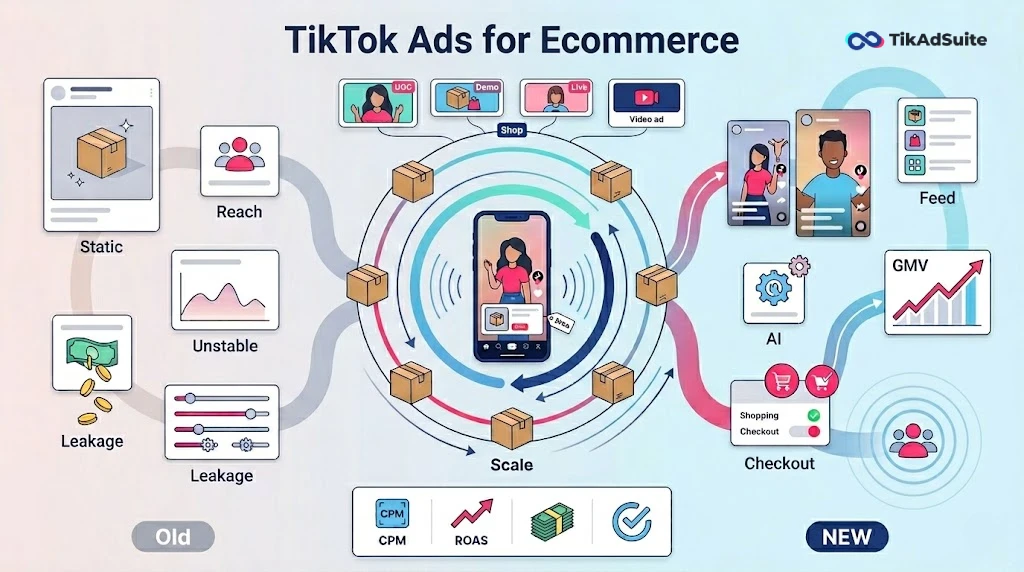
TikTok Ads work for eCommerce because the platform combines high watch time, native shopping, and a discovery-first algorithm. Shoppers find products in their feed and check out without leaving the app, which collapses the funnel and produces conversion rates that outperform standard external link campaigns.
Three things make the platform unique for online stores:
- Watch time stays high. The average user spends close to 90 minutes a day on TikTok, giving your ads more chances to land.
- Ad fatigue is low. The algorithm rewards fresh, native content. A new creative angle can revive an offer that flopped on Meta.
- Buying happens in-app. With TikTok Shop, viewers move from discovery to checkout in a few taps, which lifts conversion rates compared to off-platform purchases.
According to Statista, TikTok’s global ad revenue is on track to grow well past $33 billion, with continued double-digit growth forecast through 2027. That growth signals advertiser demand, but it also means competition is rising fast for cheap impressions.
5 TikTok Ad Formats Built for Online Sales
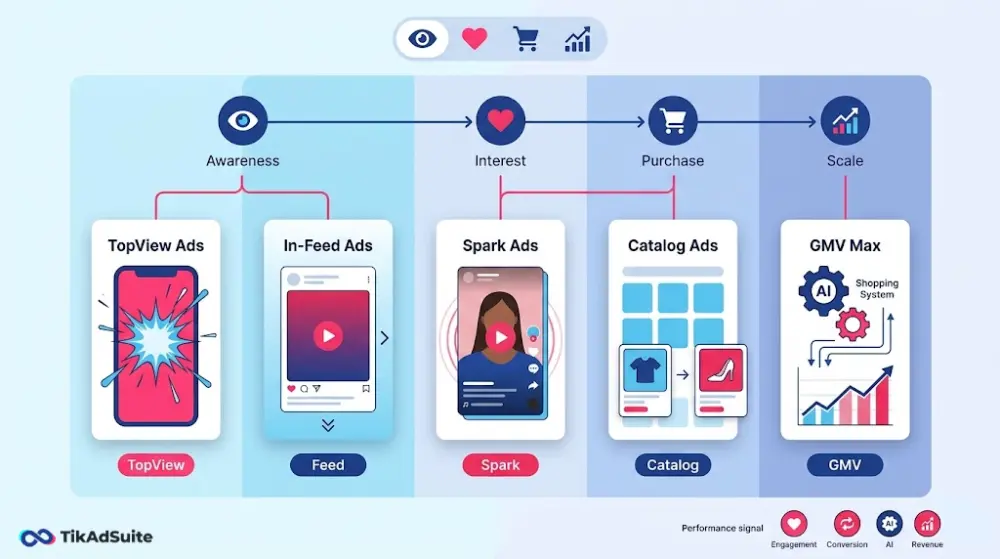
Each ad format on TikTok serves a different stage of the buyer journey. Picking the right one depends on whether you’re driving awareness, sales, or repeat orders.
Spark Ads
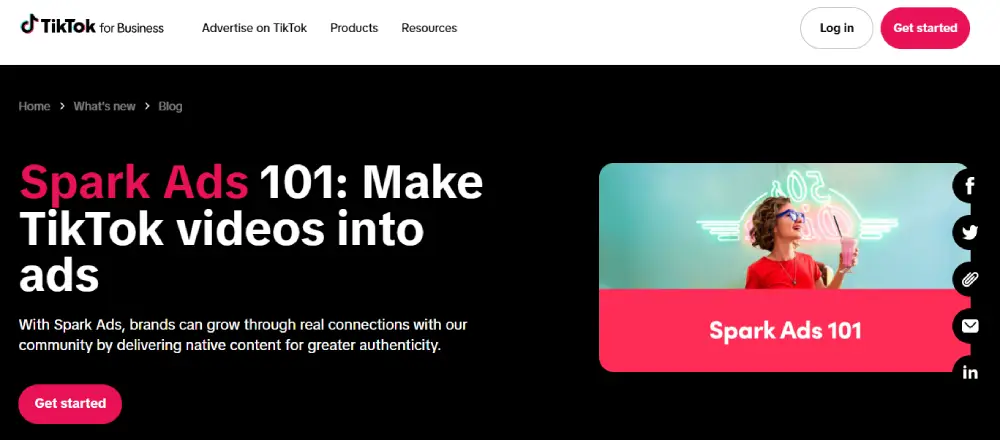
Spark Ads boost organic posts (yours or a creator’s, with permission) into paid placement. All likes, comments, and shares stay attached to the original post, giving the ad real social proof. According to TikTok For Business, Spark Ads see roughly 134% higher completion rates, 37% less Cost Per Action, and 69% higher conversion rates than non-Spark Ads.
Best for: Brands working with creators or repurposing winning organic content.
In-Feed Ads
Standard in-feed video ads appear inside the For You feed and look almost identical to organic posts. They scale well and support most direct response objectives.
Best for: Cold prospecting and creative testing before scaling winners.
Catalog Ads (Dynamic Showcase)
Catalog Ads pull from your product feed and serve dynamic, personalized video ads based on browsing behavior.
In a case study published by TikTok For Business, supplement brand Triquetra Health used Catalog Ads to grow GMV by 136% while saving 10 hours per week on manual campaign work.
Best for: Stores with 50+ SKUs and clean product feeds.
TopView Ads
TopView ads show full-screen the moment a user opens TikTok. They are reservation-based and expensive, but they place your brand in front of millions in a single day.
Best for: Major product launches or large brand awareness pushes.
GMV Max Campaigns
GMV Max is TikTok’s AI-powered automation layer for Shop Ads. It optimizes audience, creative, and bidding to maximize gross merchandise value.
As confirmed in TikTok Ads Manager documentation, GMV Max became the default and only supported campaign type for TikTok Shop Ads under the Sales objective.
Best for: TikTok Shop sellers ready to hand more control to the algorithm.
How Much Do TikTok Ads Cost for eCommerce?
Most TikTok ad campaigns in 2026 run between $4 and $7 CPM and $0.50 to $1.50 CPC for eCommerce traffic. Required minimums are $20 per day at the campaign level and $5 per day at the ad group level. Expect to spend at least $1,000 in the first month to gather usable performance signals. As cited in our TikTok ad cost article.
These numbers move with seasonality, audience overlap, and creative quality. Brands testing strong UGC angles often see CPMs drop noticeably compared to polished production ads.
If you’re early in testing, a useful rule of thumb is to budget at least 7 to 10 days at $50 per ad group per day before judging performance. The algorithm needs that runway to find your buyer.
How to Set Up Your First TikTok eCommerce Campaign
Setting up a TikTok eCommerce campaign takes about an hour once your store, product catalog, and TikTok Pixel are ready.
The setup follows a clean sequence:
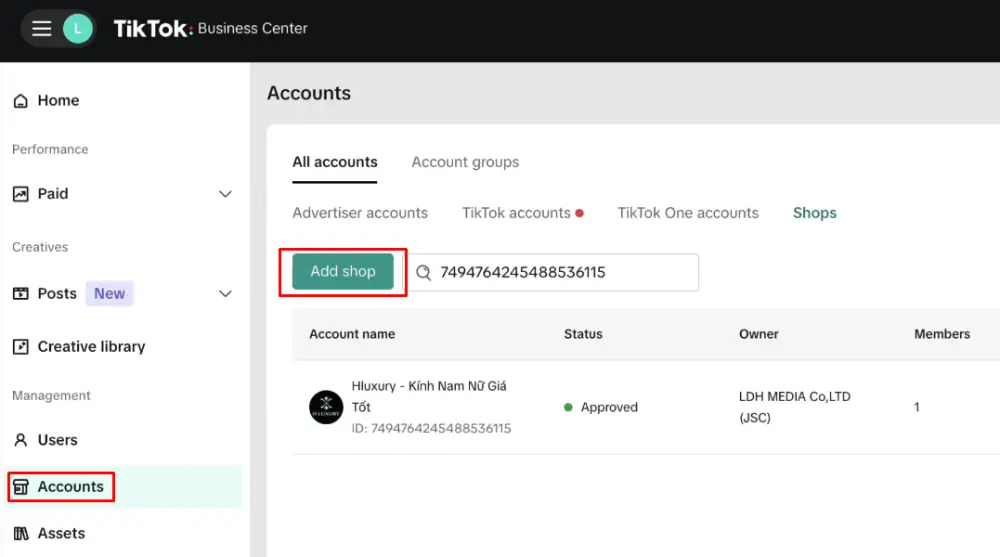
1. Connect your store and product catalog to TikTok For Business.
2. Install the TikTok Pixel or Events API for off-platform attribution.
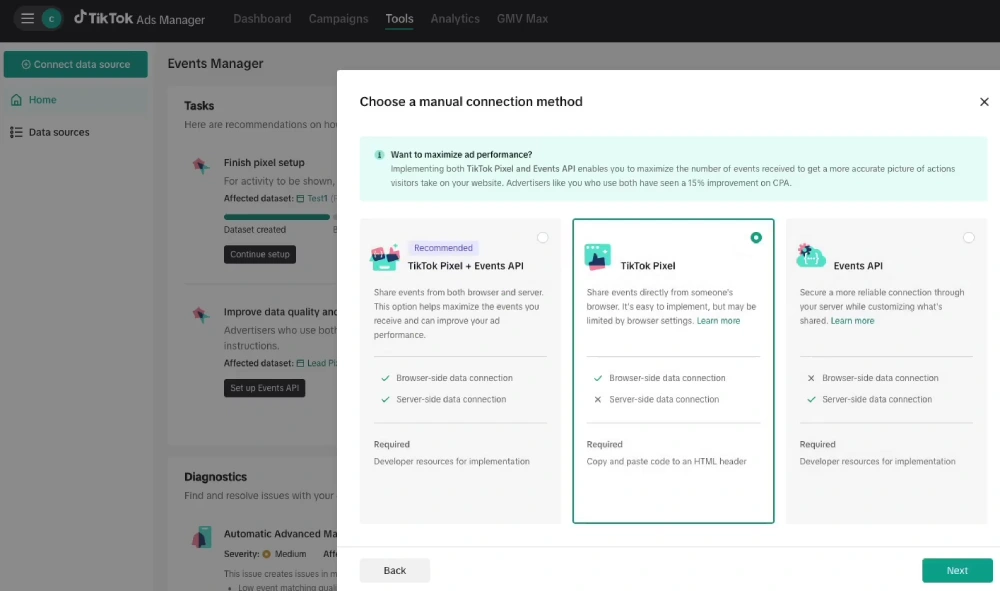
3. Pick your path:
- Selling on your own website? Create a Sales objective campaign in Ads Manager and build manual ad groups.
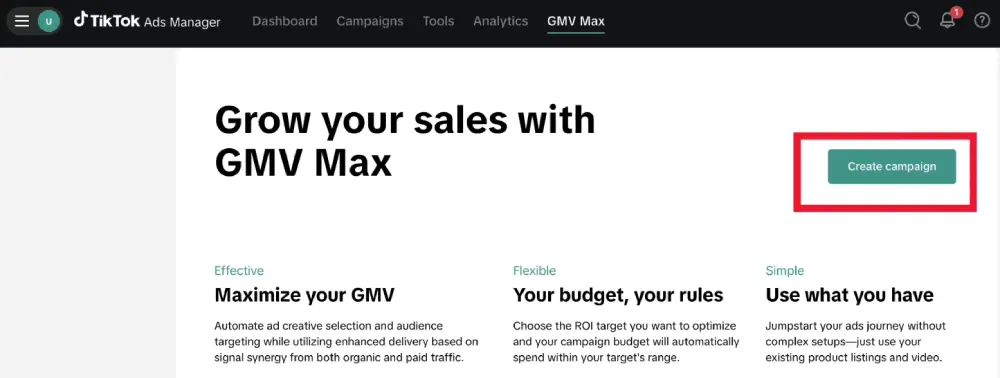
- Selling on TikTok Shop? Create a GMV Max campaign and skip ad groups entirely.
4. For website campaigns, build at least three ad groups with different creative angles (problem-solution, demo, unboxing).
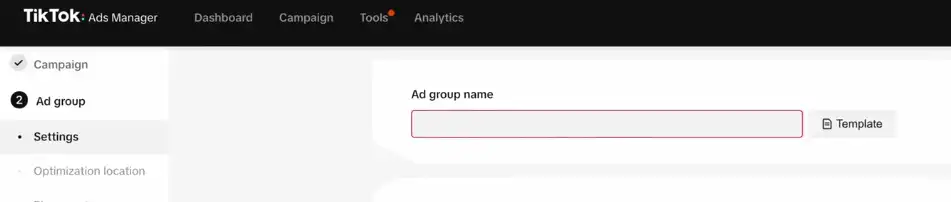
5. For GMV Max, build a deep creative library instead, including organic posts, authorized Spark Ads, and affiliate videos.
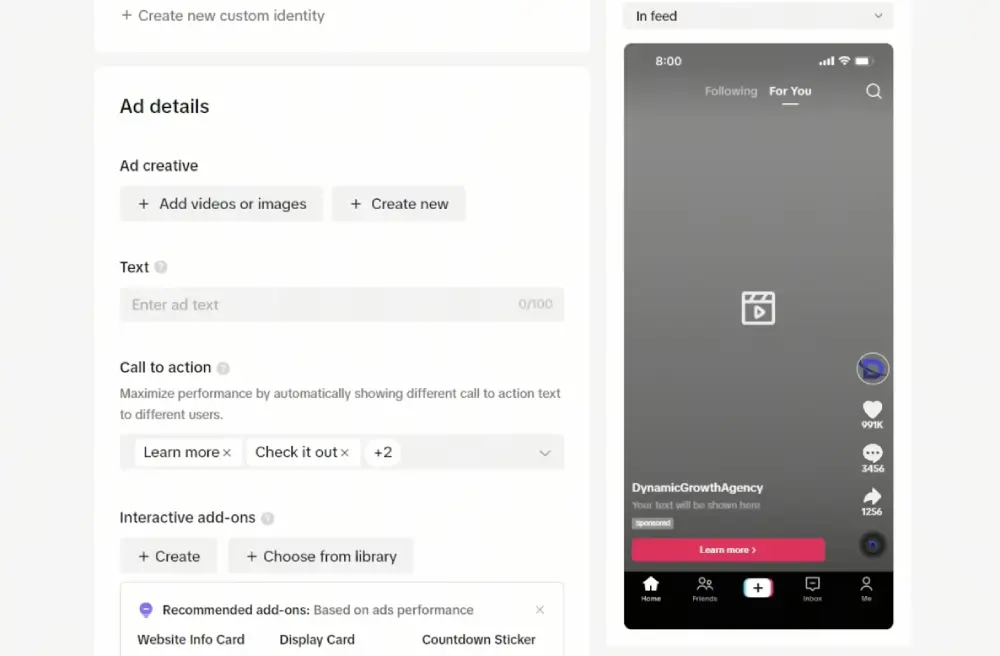
6. Upload three to five vertical videos per ad group (or per creative pool for GMV Max). Vary hooks but keep the offer constant.
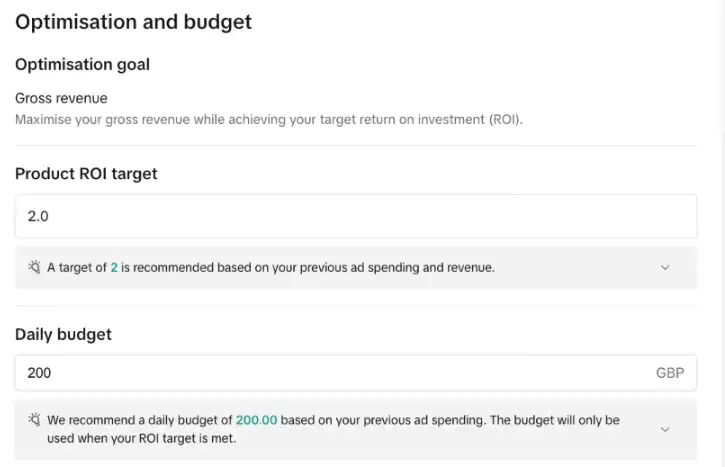
7. Set your budget. For GMV Max, this means daily budget plus ROI target.
Run for at least 7 days before pausing or scaling. Review ROAS, CPA, AOV, and add-to-cart rate by day 5.
Creative Strategies That Drive Higher ROAS
The biggest difference between brands that scale on TikTok and brands that stall is the creative itself.
Polished commercials often underperform here:
What works in 2026:
Hook fast: The first three seconds decide whether a viewer keeps watching. Open with a strong claim, a problem callout, or visual movement.
Sound on: Voiceover, native music, and trending audio all matter. Most TikTok users watch with sound on, which is the opposite of Meta.
Native style: Phone-shot, casual, single-take videos beat studio production for most eCommerce categories. Aim for “friend recommending a product,” not “ad selling a product.”
Show the product in use: Demos, before/after, and unboxing footage outperform abstract lifestyle visuals.
Test creator partnerships: Creator-led Spark Ads carry social proof you can’t fake. Whitening kit brand MySmile, for example, generated more than $1 million in GMV with 3x ROAS and an 80% lower CPA using creator-led Spark Ads, per case data published by TikTok For Business.
Refresh weekly: TikTok ad fatigue hits faster than other platforms. Plan to launch three to five new creatives per week once you find a working angle.
A quick infographic comparing native UGC versus polished ad style can help your team brief creators consistently.
How to Track ROAS and Performance the Right Way
Vanity metrics like reach and views can mislead. Focus on the numbers that move revenue.
Core metrics to track:
ROAS (Return on Ad Spend): Revenue divided by ad spend. The headline number for any eCommerce campaign.
CPA (Cost per Acquisition): Spending divided by purchases. Useful for comparing ad groups apples-to-apples.
AOV (Average Order Value): Revenue divided by orders. A bundle or upsell can lift this faster than reducing CPA.
Add-to-cart rate: Cart events are divided by clicks. Reveals whether your product page or your ad creative is the bottleneck.
ROAS by creative: Always look at performance per creative, not just per campaign. One winning video often subsidizes three losers.
Brands selling through TikTok Shop should also track GMV directly inside Ads Manager, since attribution is cleaner than off-platform purchases. A simple ROAS calculator or spreadsheet template can help newer brands estimate breakeven before spending.
Common Mistakes eCommerce Brands Make on TikTok
Most underperforming TikTok eCommerce campaigns fail for the same reasons: repurposing Meta videos, killing tests too early, skipping pixel setup, and running just one creative.
The fix is to treat TikTok as its own platform with native creative, full conversion tracking, and consistent weekly creative refreshes.
The most common mistakes:
Treating TikTok like Meta: Reusing Facebook video ads almost always flops here. The platform demands native pacing and tone.
Quitting too early: Creative tests need a few days to stabilize. Pulling ads after 24 hours wastes the learning phase.
Skipping the pixel: Without proper conversion tracking, you can’t optimize, build lookalikes, or run retargeting.
Running one creative: The platform burns through ads quickly. Single-creative campaigns plateau fast.
Ignoring product market fit: TikTok rewards visual products with a clear demo or “wow” moment. Commodity items struggle without a unique angle.
Forgetting retargeting: Most first-time viewers need multiple touches before purchase. Layer in retargeting for site visitors and add-to-cart abandoners.
TikTok Ads vs Meta Ads for eCommerce
TikTok Ads typically deliver cheaper CPMs and stronger discovery for new eCommerce brands, while Meta Ads still win on retargeting and warm-traffic conversion.
Most scaling stores in 2026 split budget across both, using TikTok for top-of-funnel discovery and TikTok Shop checkout, and Meta for remarketing and repeat purchase nudges.
Where each platform pulls ahead:
TikTok strengths:
- Cheaper CPMs in most categories
- Stronger discovery for new brands
- Native commerce inside the app
- Lower ad fatigue thanks to short content cycles
Meta strengths:
- Mature attribution and tracking
- Larger remarketing audiences
- Stronger performance on lower-funnel and warm traffic
- Better for high-consideration purchases
Splitting the budget by funnel stage usually outperforms picking one platform.
When TikTok Ads Are the Wrong Fit
TikTok is not a universal solution. Some products and audiences perform better elsewhere.
Skip or limit TikTok Ads if:
- Your buyer is over 60 and not active on the platform
- Your product needs heavy education before purchase, like enterprise software
- Your unit economics depend on a $200+ AOV with a long consideration cycle
- You can’t produce or source new creative regularly
In those cases, paid search or LinkedIn often delivers better returns.
Frequently Asked Questions
Are TikTok Ads worth it for small eCommerce brands?
Yes, for most product categories. Lower CPMs and high engagement let small brands compete without massive budgets. Brands selling visual, demo-friendly products under $100 tend to see the strongest early traction.
Do I need a TikTok Shop to run TikTok Ads for eCommerce?
No. You can drive traffic to any external storefront, including Shopify, BigCommerce, or your own backend. That said, TikTok Shop usually delivers higher conversion rates than off-platform checkout because the entire purchase happens in-app.
How long does it take to see results from TikTok Ads?
Most accounts need 7 to 14 days to exit the learning phase. Strong creatives can show profitable ROAS within the first week, but stable scaling usually starts after the second or third creative refresh.
What is the minimum budget for TikTok Ads?
TikTok requires at least $20 per day at the campaign level and $5 per day at the ad group level. For meaningful eCommerce testing, plan to spend at least $1,000 over the first 30 days to get a usable signal.
How often should I refresh TikTok ad creative?
Plan to launch three to five new creatives per week once you’ve identified a working angle. TikTok ads fatigue faster than Meta, and consistent creative testing is the biggest lever for sustainable scaling.
Can I run TikTok Ads without making my own videos?
Yes. Spark Ads let you boost creator content with permission, and Catalog Ads can generate dynamic videos automatically from your product feed. Both reduce the in-house production load.
Final Word
TikTok Ads for eCommerce reward brands that move fast, stay native, and trust the data. The platform’s native shopping tools, AI-powered campaigns, and creator economy now make it possible to scale a store from zero without ever buying a Meta ad.
Start with one Sales objective campaign, three creative angles, and a tight tracking setup. Once you find what converts, double down on creative volume and let GMV Max do the heavy lifting on optimization.
The brands winning in 2026 are not the ones with the biggest budgets. They’re the ones who keep shipping new content every week.